Asia Bike Tours live at Moto Austria 2026 · February 6–8 · Wels · Tour talks, meet & greet and real motorcycle journeys through Asia

It's probably impossible to answer all the questions that arise inconnection with our tours here. We've compiled a few based on our many years ofexperience and for your convenience, and we're constantly adding to them.
A world travel plug can't hurt, but it's often not useful (Vietnam, Thailand). In India, China/Tibet, it can be useful as our plugs are not 100% covered. It is also worth mentioning that there can be regular power outages in smaller towns in Tibet, so that a flashlight is a useful addition.
You must take the personal medication with you for the duration of the tour, although we recommend that you transport it by hand (delayed delivery...). We also recommend that you bring a small motorcycle association package.
No, your own trips or self-selected routes are not allowed. On days without a general program, private trips are possible after consultation with the tour guide.
This is definitely not recommended. In Thailand, for example, insulting majesty is a red flag: insulting or acts against the king of Thailand, the royal family and the Thai monarchy are still punishable.
Every culture has its own social codes and norms of conduct. In India, the left hand is traditionally considered impure, and public displays of affection are rather unavoidable. In Tibetan-dominated regions, touching men or nuns should be avoided. In countries such as Thailand, it is also considered disrespectful to touch people - including children - on the head. In addition, insulting majesty is an absolute taboo in Thailand: insulting statements or actions against the king, the family or the monarchy can be prosecuted. We recommend that you briefly inform yourself about local practices before traveling to avoid misunderstandings and treat the local population with respect.
Distinguish: is it food at a traditional market or goods at a tourist market? Food is generally not traded. Of course, this also includes bars/restaurants and supermarkets. For all other goods, on the other hand, and especially for souvenirs, trading is permitted and is even expected and is part of the sales process (exceptions: references to “fixed price”). The question is not “How much does something cost” but rather “How much am I willing to pay.” No retailer intentionally sells anything at a loss, even if despair is played by the dealer. Recommendation: visit several retailers, do not walk around in expensive branded clothes and lots of jewelry. If possible, travel with locals, a few words in the local language sometimes work wonders. Halve the asking price, around 50-60% of the asking price is a good starting point, stay friendly. Show a certain skepticism, if you feel like something and you really want it, don't show it too obviously. Act as if you don't care whether you get the goods. Just walk away thankfully if you can't agree on a good price. Retailers often give in then. Keep your word! If you name a price and the retailer approves, you also have to buy. Deciding otherwise is considered absolutely unreasonable.
Asian countries often have their own messenger services, although it is clear that broadcasters and recipients also need to use them. WhatsApp often works but does not work in China/Tibet - Wechat is the standard there. Facebook and Google also don't work in China/Tibet. The most popular search engine in China/Tibet is Baidu. Zalo is common in Vietnam, in Thailand Line. In India, WhatsApp is very popular and widely used.
Minimum age: In theory, from possession of a motorcycle license, but we require safe handling of motorcycles. There is no upward age restriction on the part of ABT.
Yes These must be complied with without exception. In the case of photos of people, permission for a photo must be obtained before taking it through (if possible) linguistic comprehension or gestures.
On around 80% of our tours, the accommodation offers WiFi connections. However, you can usually get a local SIM card at the airport - there are often tourist cards that are affordable and in addition more secure than open WLAN networks.
Yes, it is all common and does not differ significantly from our practices. 5-10% is, depending on satisfaction, a reasonable amount.
Tipping is a voluntary benefit to which there is no entitlement. In the past, tips amounted to around 2, -? - 4, -? leveled off per day and per person. This then means that, for example, the guide, the driver/mechanic on a tour around 30, -40, -? get. That's why they care about motorcycles, luggage and minor concerns.
AsiaBikeTours offers guided motorcycle tours in Bhutan, Myanmar, China (including Tibet), India, Nepal, Kyrgyzstan, Thailand and Vietnam, covering a wide range of landscapes and cultures in Asia.
Yes, comprehensive travel, health and accident insurance is absolutely necessary for all tour participants. Credit card companies (e.g. VISA and Mastercard) usually offer various types of insurance with their cards when used accordingly. Please check the coverage of your card before you travel. In Austria, the “world travel insurance”, which is available in addition to the letter of protection (which is only valid in Europe), at favourable conditions and is valid for one year, has been very well established at the AMTC automobile club. It covers all costs arising from an insured event (return transport, hospital costs?). It applies to all family members living in the insured person's household even if they travel separately). However, it does not include cancellation insurance or luggage insurance (which is included with some cards).
Our bodies quickly adapt to existing temperatures, but this can also mean that it is a bit cold at 25 degrees. A warmer jacket for evenings won't hurt on all tours. In Tibet, it is definitely expected that it will be cold even in May (6-8 degrees all day and you feel it even colder while driving): there is warm clothing, including warm motorcycle gloves! irreplaceable. In India, it can cool down on high horses and in North Vietnam it could also be cooler on some days (which, admittedly rarely, is something we have experienced).
Of course! Apart from the fact that the guide stops at interesting points, individual photo stops are of course possible. It is important to park the motorcycle on the road and not leave the road/track so that the support vehicle can see the motorcycle.
Unless transportation is prohibited by general state regulations, you can take your drone with you and use it where this is not expressly prohibited on site. However, there are areas where drones are not prohibited and recordings still don't work!
Please bring your own protective clothing, both for safety and hygiene reasons.
It is possible but not necessary to bring a GPS with you. In case of transportation, participants b must provide an appropriate bracket and a power supply, which is not standard equipment on many motorcycles. The same also applies to a mobile phone holder. Our mechanics will help you with the installation.
No The guide presents and is (unless announced) impossible to pick up. The support vehicle is leading at the end, there is free travel in between, although the weaker drivers should rather drive further forward because the speed gets faster towards the end.
No, that is not necessary (although bringing a multi-tool such as Leatherman or similar is almost part of the basic equipment of a biker anyway - be careful not in the hand bag)
Of course, it may not necessarily be appreciated, because even voluntary gifts later on lead to increased begging again and again. If gifts (e.g. gummy bags, etc.) are distributed, please only when there is already contact and not to beggars!
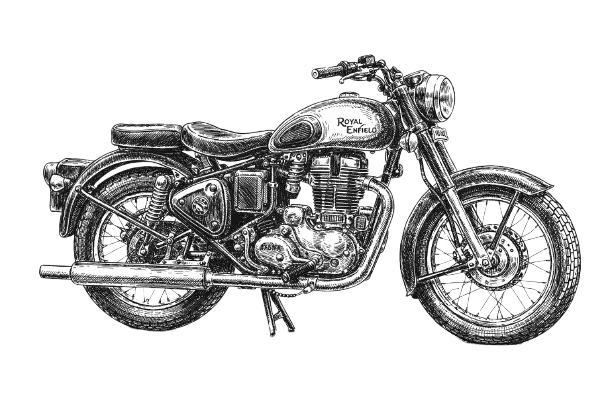
The motors we use come in standard equipment for road approval (electric starter, turn signal, main side stand, rear mirror, lighting...) and appropriate tires as well as (depending on the model) crash bars. Depending on the model, backpacks/side carriers are available and occasionally leather side pockets. (especially with the Enfield Bullets) Motorbikes equipped with a top case or side case are also available, depending on the tour. When booking, be sure to specify whether solo or passenger operation is envisaged.
First of all, there is no liability or comprehensive insurance in Asia, as in Europe. If the motorcycle is picked up on site, the tenants must pay a deposit of 500 (five hundred) USD from the tour guide against a corresponding confirmation, right? to be deposited in cash. At the end of the tour, this will be fully refunded if the motorcycle is returned properly. MOTORCYCLES: The condition of the motorbikes is documented before the start and after the end of the trip (in writing/photos). Except in the case of intent or gross negligence, the amount of the deposit corresponds to the tenant's own contribution. Damage due to regular wear and tear is excluded. LIABILITY: In the event of damage to third parties or property damage, the tenant is obliged to pay the entire amount of damage to the injured party. In the case of minor claims, it makes sense to settle claims directly on site: possible legal proceedings in Asia may take over several years. From practice, it can be stated that in 27 years of tours with Asia Bike Tours years, there has been no case so far where the deposit has not been refunded.
The ideal time varies from region to region. In general, India is best to visit from October to March due to the mild weather. The Himalayan regions such as Ladakh are best explored in July and August when the snow has melted. Nepal is at its best in October and November after the monsoon season and in spring from February to April. Tibet is most pleasant in April and May or in September and October when temperatures are warm and the sky is clear. In Thailand and Vietnam, the months between November and April are ideal.
China and Tibet offer a variety of landscapes, from plateaus to river systems, and have a rich cultural heritage. India offers everything from the Himalayan mountains to deserts and tropical coastlines. Nepal is known for its dramatic mountain landscapes and exciting high-mountain routes. Thailand in the north has very well-maintained roads and delights with beautiful pagodas. With the karst mountains in the north and Halong Bay, which is a UNESCO World Heritage Site, Vietnam has places worth seeing. Not to forget the exotic markets and good food, which applies equally to most of the countries visited.
Wait along the way, don't start searching for yourself right away. If you are not found within a period of approx. 1.5 hours: the respective endpoints of the driving days are known and could be reached directly in such an (extremely unlikely) case.
Traffic regulations and road quality vary from country to country. AsiaBikeTours provides travelers with detailed guidance and assistance to ensure they understand local traffic regulations and are well prepared for different road conditions in different regions.
In contrast to our behavior, which requires first aid, this is often associated with considerable personal risk in Asian countries. As unusual and as incomprehensible as that may sound to us, you should only set in motion a rescue chain and not start with your own attempts (except: doctor), because you can be interpreted as the culprit very quickly by the random foreign assistant. As a result, this can lead to the acceptance of the rice passport and, in the worst case, to a conviction until the question of fault is resolved and that can take time. Rule of thumb: don't stop! In the case of minor cases, the matter can usually be settled by payment. Don't expect insurance forms in Asia; there is usually no insurance.
Travelers need a passport that is valid for at least six months after the end of the trip. For most destinations, a visa is required: Nepal offers a visa upon arrival at the airport in Kathmandu; Bhutan visas are obtained by AsiaBikeTours at the border; in addition to the Chinese visa, Tibet requires a special permit, both of which are obtained by the operators. Austrian and Swiss people need a visa for Vietnam, but Germans up to a stay of 45 days do not. In Thailand, pre-registration “tdac” (online) is now required. The appropriate form should be submitted 3 days before the planned entry. A printout of the confirmation email must be presented upon arrival. Germans, Austrians and Swiss also need a visa for India, which is valid online. A valid motorcycle license and an international driving license are mandatory for all participants. Although this is not always checked, it is spared during checks (and there are!) time and money. The international driving license is only valid in conjunction with the valid national driving license and cannot be extended. Validity period D: 3 years, A 1 year, CH 3 years from date of issue. ATTENTION! When issuing your International Driving Licences, please indicate which country it is required for! Background: There are transport agreements from 1949 and 1968, but they are not recognized by all countries. Example: India demands 1949, Vietnam 1968. According to unconfirmed reports, both should be recognized in some places in the meantime — it is doubtful whether the control bodies also know this during an inspection.
General experience in handling a motorcycle is required, no special knowledge is required. The tour descriptions show whether these are easy-to-drive routes on Asphalt or whether gravel slopes/sandy sections and water crossings have to be mastered. Our tours are not hard enduro tours.
You don't have to be a top athlete, but basic physical fitness is recommended - which by the way is not just true for these tours.
Travelers should ensure that routine vaccinations are up to date, including tetanus, diphtheria, polio, hepatitis A and B, and typhoid fever. Malaria prophylaxis may be necessary in some regions, and travelers should consult with a doctor — prophylactic agents such as Malarone. There is a risk of hen disease in areas such as the Himalayas and Tibet, which is why appropriate acclimatization and medical advice before traveling are important. A rabies vaccination is highly recommended.
AsiaBikeTours uses region-specific motorbikes. In India, Nepal and Bhutan, we rely on various Enfield models (Royal Enfield Bullet 500cc (switched left), which are known for their classic design and adaptability in different terrains, Himalayan 410 and 450). In China and Tibet, the Yamaha YBR 250cc (known to us as Fazer 250) is used because of its smooth power delivery and easy handling. Some CF Moto 450MTs are already in use. In Kyrgyzstan, the Honda CRF 250L and Yamaha XT 600E are selected because of their reliability. In Thailand and Vietnam, we drive with Honda CRF 250L and also Honda CB500X. All motorcycles are equipped with tires suitable for the area of use. More information about the motorcycles: HONDA CRF 250L: is a versatile enduro that is suitable for both road traffic and light terrain. It has a water-cooled, very fast 250 cm single-cylinder four-stroke engine with injection, which offers good running performance, very good power delivery and low consumption. Your approx. 23 hp is completely sufficient. Suitable for solo operation. CF MOTO 450MT: Designed to redefine adventure travel, the 450MT combines agility with unparalleled versatility. It is powered by a 450 cm2-cylinder water-cooled engine that produces 42 hp. There is some KTM technology in this bike. The chassis can be adjusted several times and the easy-to-read display provides comprehensive information on many parameters. Well suited for passenger businesses. ROYAL ENFIELD, HIMALAYAN 450: Has a water-cooled 4-stroke 1-cylinder engine with injection and a cylinder capacity of 452 cm” and 40 hp. ROYAL ENFIELD HIMALAYAN 410: The Royal Enfield Himalayan 410 comes with an air/oil cooled 4-stroke 1-cylinder engine with 411 cm” and has approx. 25 hp. Both allow very comfortable sitting positions even on long distances and are suitable for passenger use. ROYAL ENFIELD BULLET 500: is a traditional motorcycle known for its classic style and robust construction. It has been in production in almost unchanged form since 1932. The Bullet 500 has a 500 cm single-cylinder four-stroke engine and today also electronic fuel injection and is air-cooled, it has around 27 hp. Good for passenger use. YAMAHA FAZER 250/YBR250: The Yamaha YBR 250 is a lightweight and handy naked bike with a 249 cm single cylinder engine, has injection, is air-cooled and produces 21 hp. It is suitable for longer trips and is characterized by its timeless design and reliable technology. Operation with pillion possible (has already been done on tours, but is not necessarily recommended). HONDA CB500X: The Honda CB500X is a versatile adventure bike that is also very suitable for longer tours. It is equipped with a water-cooled 471 cm inline two-cylinder engine with injection, which produces 48 hp and ensures a pleasant ride. The CB500X features a comfortable sitting position, good ergonomics and a reliable chassis. Well suited for use with pillion. KOVE 500X: The machine sold in Western markets under this name (other name COLOVE 500X or EXCELLE), water-cooled 2-cylinder engine with injection and 43 hp is used on tours of Tibet if necessary. This machine is also well suited for passenger operation.
Here are some suggestions of typical souvenirs from countries we have visited. CHINA: Chinese silk, timeless luxury and more than “just” a fabric, tea and tableware, calligraphy and painting, jade jewelry, eating bags, ceramic balls, cloisonne (artisanal technique used in enamel work). TIBET: Prayer flags, books to honor Buddha, expulsion of devils and religious rituals, Tibetan jewelry, Tibetan medicine, ox horn. BHUTAN: woven textiles made of cotton or raw silk, woolen fabrics (yathra) known as bright colors and patterns, thangka paintings (artistic scroll paintings with often religious motifs), handmade paper made from the bark of the Daphne bush, carvings, bowls and other decorative objects made of wood, bamboo products such as baskets, mats, wall hangings, silver jewelry with elaborate designs and decorations, including charm bracelets with pearls made from seeds, wood or precious stones, authentic incense, unique spirits such as rice wine (macaw) or whiskey, Prayer flags and prayer balls as important elements of Buddhist faith, Bhutan red rice. INDIA: Silk, silver jewelry, various types of tea, carpets, fabrics embroidered with small mirrors, spices, lively stone inlays (table tops, glass coasters, storage boxes?). KYRGYZSTAN: felt products, honey, dried fruit, silver jewelry, ceramics with typical local ornaments, small models of yurts. MYANMAR: Lacquer paintings from Bagan, fabrics from lotus weaving on Inle Lake, marionettes, silver jewelry and gold plets from Mandalay, colorful paper umbrellas made of Pathein, cigars from Shan State, Buddha figures made of wood or marble. NEPAL: pashmina scarves, khukuri knives (authentic Nepalese daggers), rice paper products prayer mills, dolls, traditional masks, carved wooden objects, ceramics, hemp products, spices, tea, gold, silver, yak bone, semi-precious stone, blue lapis. THAILAND: Silk, hand-carved soaps and candles, spices, tea, balms and oils, and miniature tuk-tuks. Also Buddha statues, marionettes and lacquerwork. VIETNAM: colonial hat (Non La) in all sizes and colors, coffee (Robusta), tea, custom-made clothing, silk, ethnic minority products, handbags, ao dai (the traditional Vietnamese costume, a long, tight-fitting dress worn with wide pants, a symbol — elegance and grace, often referred to as Vietnam's national dress), hand-embroidered articles, Vietnamese lanterns, beaded Jewelry, spices - especially peppers, water puppets.
A mix of cash, credit card and ATM card is recommended. For the latter, be sure to activate “Geocontrol” fc outside Europe for the duration of the trip. Visa and Mastercard are often accepted, American Express and Diners are not. Payment by card is not always possible in remote areas.? and USD are accepted. If necessary, bring smaller notes (= tips). Important: Please ensure that only almost new and undamaged notes are accepted. Often, even a small complaint is the rejection of a note. Withdrawal of cash from vending machines with an ATM card or credit card often entails considerable costs, reckoning around 10, -? in addition to the settled sum. Exchanging money in national currency is usually possible at airports, but in the meantime the conditions are at least the same and often better than in exchange offices in the city. Jewelry shops often offer cheap courses in cities.
Conditionally. If necessary, we provide vegetarian and vegan food where possible. Furthermore, we cannot guarantee that, for example, lactose intolerance or gluten intolerance etc. will be taken into account.
In general, our groups consist of 4-10 drivers. This manageable group size is deliberately chosen: It allows smooth and flexible progress and facilitates cooperation within the group. Our group size is a special feature that highlights our tours.
It is recommended that you only eat freshly cooked meals and avoid raw salads and unpeeled fruit. To ensure water safety, travelers should only drink sealed bottled mineral water and completely avoid tap water, including cleaning their teeth!
There is poverty, there is no doubt about it. It is there and must be fought, giving handouts to beggars is ultimately no way out of poverty. People usually pray where tourists are out and about: there are organized gangs behind many beggars. Beggars must give a large part of their income to gang bosses, and they barely have anything left of it themselves. You can also see crippled, blind or sick beggars and those who ask for money with open wounds that they supposedly need medical care. It is difficult to give nothing here and nothing even to begging children. Example Ladakh in India: For several years now, organized beggars have been brought to Ladakh at the beginning of the travel season (some of them flown!!!). They then beg in Leh or at the entrance to the well-known sights. Giving money there only increases the profit of the gang bosses. At the end of the season, they are taken to another more lucrative location. Hard reality: You also see women begging for money with (mostly sleeping) babies so that they can feed it. However, you should know that these babies are often “rented” and are occasionally brought to sleep and still with narcotics (usually in the evening in “walking streets” in large cities in Vietnam). Some “moms” with babies who appear in torn clothes ask for money to buy their child milk powder in a nearby shop. You might be doing that rather than giving money. BUT the woman works with the business owner, the money is shared and the milk powder stays in the shop. It's almost impossible to guess that these “moms” are often found in areas heavily frequented by tourists. Some children also just beg for fun because they have learned that tourists like to hand out sweets or other small gifts: in doing so, they lose joy in school and prefer to run after tourists and challenge. An additional topic is that these children are now “richer” than their colleagues and “deserve”. Gifts are okay, but only to people you also relate to. Our recommendation: Only distribute gifts actively and not on demand and do not give them to beggars or money.
The question of souvenirs cannot be answered in the same way for all regions; the topic is too complex in the meantime. In general, however, if you buy souvenirs that contain endangered animal or plant species, you are definitely liable to prosecution. Illegal export or subsequent importation into many countries can result in heavy penalties (fines and imprisonment!) In Vietnam, bottles (available in various sizes) containing reptiles marinated in alcohol are particularly subject to the ban. In Thailand, there are now cannabis products in all forms in many places, the sale of which is also a legal grey area in Thailand: not really prohibited, but also not completely allowed, rather tolerated. Importing these products is prohibited by us and has recently led to attacks with unpleasant consequences on airports. Ivory products are an absolute no go, as are exotic animals, whether alive or dead. Care should also be taken with animal skins. When it comes to antiquities (if they are genuine), you are well advised to have an export license. Popular souvenirs include shells, stones and sand: either found by yourself or purchased in souvenir shops. At an increasing number of destinations, it is expressly prohibited to bring shells, stones and sand. It is usually impossible for laymen to distinguish whether these are prohibited mussels. Note: Official local purchase is often possible, but importation from us is prohibited!
Vietnam: Since January 1, 2025, the import, possession and use of all electronic cigarettes (including vaporizers, tobacco heaters, etc.) and related equipment have been prohibited. The importation of e-cigarettes is also prohibited in other countries. For example in Thailand, India, Singapore and the Maldives
Our tours include all costs with the exception of personal expenses for additional drinks with meals and souvenirs. As a rule of thumb, you should bring around 200, - 300, -? proven. In addition, there are 500, -? /USD as a deposit for the motorcycle.
Expect a net travel time of around 5 hours. Depending on the route, this can be a different number of km. On average, it will be between 100-200km. Sometimes less than 100 km, rarely significantly more, where road conditions also allow it without any problems (such as on a 500 km route in Tibet).
The tour usually starts with pickup at the airport and ends with a transfer back there. In between, (almost) everything is taken care of. Most tours include all transfers, nights, meals, sightseeing, permits, motorcycles, gas, support vehicle, mechanic, and tour guide. Our guides are highly qualified and ensure that everything runs smoothly, so that everyone can embark on the adventure of a motorcycle trip completely relaxed. The trip starts with a transfer from the airport to the first hotel. The guide is available at any time - be it with questions about exchanging money, buying a local SIM card, making last purchases or if the luggage sticks around. We often have dinner in hotels or guest houses, and sometimes we also take advantage of good opportunities in local restaurants. The itinerary is planned and all accommodation is booked in advance. Of course, unexpected weather or road conditions may make short-term changes necessary — testing our adaptability is often also the particular appeal of the adventure. Thanks to decades of experience in the regions visited, we almost have an excellent network of trustworthy contacts. In this way, we always have access to the latest information and receive support at any time. Of course, with our support vehicle and mechanic, we also lend a hand to stranded adventurers along the route. The typical everyday tour routine is as follows: breakfast, put on motorcycle clothes, load luggage into the support vehicle, start machines and go out into freedom. On the way, we stop for drinks, at beautiful viewpoints or visit one or the other tourist attraction. At lunchtime, we make a short snack stop - ideally sweet without making any effort - and in the afternoon we reach the hotel of our destination. After checking in, there is time to relax, explore the area or simply arrive extensively. In the evening, we meet for the main meal of the day, discuss what we have experienced and the plans for the next day and round off the evening in comfort. There are also occasional drive-free days for relaxation, sightseeing, washing laundry, writing digital postcards or individual exploration. Some driving days are long and exhausting, others are short and make it possible to visit sights in the morning or relax by the pool in the afternoon. Each day is an adventure in its own way. Motorbike travelers know that you can never know what's in store for you along the way. We start in the morning so that there is still buffer time in the afternoon so as not to fall into darkness in the event of unexpected delays - we only drive at night in an emergency. Together, we enjoy the invigorating freedom of motorcycling through impressive landscapes, treat the places visited and people along the way with respect, and are curious about everything we will experience. Our daily tour routine follows the motto of our founder Heinrich: “As organized as necessary, as relaxed as possible.” At the end of the journey, you not only take home unforgettable impressions and exciting stories, but often also new friendships, broadened horizons and experiences that reverberate deeper than a machine on two wheels can ever do.
To book a tour, visit our website and click on “TOUR DETAILS” for the desired tour. Under the “DATES & PRICES” category, click on “BOOK A TOUR” for the desired option. Enter your details and payment information and confirm the booking. You will receive a booking confirmation via email.
The carefully calculated tour price covers costs such as motorbikes, fuel, mechanics, admissions according to the tour program, ferry tickets for river crossings and boat trips, accommodation, all food, water with meals and during the day, support vehicle, transport from and to the airport, domestic flights included in the tour. Costs such as possible visas, long-distance flights from home to the “operational area” and back, alcoholic drinks and personal expenses such as souvenirs are not included.
Your luggage is transported in a support vehicle. You only travel with daily clothes (drinks, photo equipment, possibly rainwear...). Small day packs are convenient for transportation. For possible attachment to the motorcycle, please bring straps or rubber tensioners. As travel luggage in the support vehicle, bags are better than suitcases.
Yes, when it rains - but we usually only know that when it starts to rain... It can rain on all tours, sometimes only briefly, but then heavily. The rainwear is either stowed away in day bag/on the motorcycle or carried within easy reach in the support vehicle. Since this is usually close to us, it can be accessed quite quickly if necessary
Yes An international driving license in combination with the national driving license is mandatory. It is not always checked, but in case of failure, it must be presented.
It is advisable to carry a combination of cash (USD or EUR), a credit card (Visa and Mastercard are available; American Express and Diners are accepted much less frequently) and an ATM card. The ATM card should be activated at the bank for the travel time for foreign European countries (keyword Geo Control). Card payments are not accepted in many places. When carrying cash, be careful to only bring undamaged notes, as even slightly damaged notes are often not accepted. Small notes are recommended. In larger towns, ATMs are usually available, but the density is significantly lower than in Europe. Currency exchange is possible at airports, hotels and official exchange offices. Note: There have been isolated cases that ATMs have been manipulated and card data was then misused. We therefore recommend that you only use ATMs in secure, well-frequented locations (e.g. in banks or larger hotels).
With the Royal Enfield Himalayan 450. On request, the Himalayan 411 Or the legend Royal Enfield Bullet 500 (left shift, electric starter, front disc brake) available.
Yes An international driving license in combination with the national driving license is mandatory. It is not always checked, but in case of failure, it must be presented.
Honda CRF 250L, CF Moto 450MT, Honda CB 500X
It is recommended to bring a mix of cash (USD, EUR), a credit card (Visa and Mastercard suitable; American Express and Diners less common) and an ATM card. The latter should be activated for use in foreign European countries during the travel time (“Geo Control”) .In Vietnam, card payment is not yet widespread across the area: Credit or bank cards are often accepted in larger cities and tourist areas (hotels, larger restaurants, supermarkets), in rural regions, on markets Or in the case of street workers, on the other hand, almost exclusively cash. Tips should be used in small notes, coins are less practical. ATMs are widely used in larger towns. It is possible to exchange money at the airport (often without high fees) or in numerous exchange offices and in some shops. When it comes to cash, make sure that the notes are as easy as possible, as small coins often mean that notes are not accepted.
Yes, upon arrival, there are stations at airports that offer tourists SIM cards at fair prices. The provider Viettel (best network coverage, especially in rural areas) is recommended. The mobile network is very well developed, and a personal SIM card is also more secure than open WLAN networks.
Visa requirements may change at any time. Therefore, always check the latest information on official government websites. The following information is for guidance only. Austrian citizens require a visa to enter the country. The passport must be valid for at least one month longer than the visa. E-visas must be presented in printed form upon arrival; the presentation only in digital form is not sufficient. Online visas, for example, are available here: https://evisa.gov.vn/. E-visas can also be applied for by other agencies, usually at higher costs. German and Swiss citizens can travel visa-free for stays of up to 45 days. The passport must be valid for at least six months after the end of the stay upon arrival. A booked return or onward travel ticket should be available. It is advisable to bring proof of sufficient funds for the stay.In Vietnam, there is a requirement for identification; an ID must be carried at all times. In addition to the national driving license, an international passenger license issued in accordance with the Vienna Road Transport Agreement of 1968 is required. Other versions (1926 or 1949 agreement) are not recognized. The documents listed here (except passport) are not always checked, but should be available in any case.
Various sources provide different information on this: they range from legal for private imports for personal use to three whole shells with a maximum total weight of 3 kg per person when transported in personal luggage to complete bans, especially for protected species. Sand and pebbles must not be brought along. As a result, refrain from these gifts.
Vietnam offers a variety of impressive photo opportunities that people like to remember, but general photography bans must be observed, such as military and military facilities. In Buddhist temples, photography is sometimes not permitted or is only allowed to a limited extent. When taking pictures of people - especially on markets - you should always ask for permission beforehand, either by asking questions or with a friendly gesture. Less common among us, but common in many Asian countries: Many people prefer to be photographed in conscious poses that they find beneficial. Showing the photo afterwards often results in a friendly smile and makes contact with the local community easier. When taking pictures of elephants, flash should not be used, as a frightened elephant can react dangerously. In shopping centers and at shows, photo and video recordings are often only permitted with the express permission of the operator.
In principle, flying drones is allowed in Vietnam, provided that the numerous regulations and special bans are observed. Sounds complicated — and it is. All drones must be insured, and the Civil Aviation Authority of Vietnam (CAAV) requires a permit for every flight. It is best to apply for this at least 14 days in advance, including detailed information about the location and time of the planned flight. The not inconsiderable costs are lost if the weather does not play along on the scheduled flight day. Legal aspect: For tourists, it is very difficult to obtain a drone permit themselves. It is easier to hire a local company to apply. Practical aspect: In theory, the approval process is uncomplicated, but in practice it is complex, time-consuming and chargeable - effort that most people would rather refrain from. That is why many tourists fly their drones without official approval, especially in less regulated rural areas or on the coast. Authorities have the right to seize drones, particularly in larger cities such as Hanoi or Ho Chi Minh City. Of course, military installations and no-fly zones around airports must be respected at all times. The regulations are subject to constant changes. It can be assumed that many drone images published online by tourists were taken illegally. However, this is not an invitation to do the same. We expressly do not recommend a “no risk, no fun” approach.
All forms of e-cigarettes, vapes, e-shishas, vaporizers, pod systems, and tobacco heaters are prohibited. This also applies to the possession, purchase and sale of liquids - regardless of the nicotine content. Smoking is prohibited in bars and in many public places, including public buildings, public transportation, schools, hospitals, and temples. However, smoking is quite widespread in society and is visible in everyday life.
Yes, WhatsApp works well, but the most widely used messenger app in Vietnam is ZALO, available in the Google Play Store and the Apple App Store. Telegram and Signal also work reliably, but are used less frequently by the local population.
Typical souvenirs from Vietnam include conical hat (NN L) in all possible sizes and colors, Vietnamese coffee (especially Robusta) and tea. Tailored clothing, silk products, hand-embroidered articles and ethnic minority products are also very popular. Classic gifts also include handbooks, Vietnamese lanterns, pearl jewelry and spices, in particular pepper. A special cultural souvenir is the o di, the traditional Vietnamese costume - a long, tight-fitting dress that is worn over wide pants and is regarded as a symbol of elegance and grace. The range is rounded off by water puppets, which are reminiscent of traditional Vietnamese doll art.
In addition to our usual standard vaccinations, no further vaccinations are required for Vietnam. Rabies vaccination is recommended again and again, as there may be occasional attacks by stray dogs, particularly in rural areas. A preventive vaccination against malaria for travelers is currently not available. There is a low risk of malaria in Vietnam all year round; however, large cities and most tourist centers are considered malaria-free. There is a low residual risk in the central and southern highland provinces and in regions bordering Cambodia and Laos. Vaccinations against hepatitis A and B and typhoid fever are generally not required. We recommend that you seek advice from a doctor who is competent in tropical medicine well in advance of your trip.
Vietnam has different climate zones due to its geographical extent: In the north, there is a subtropical climate with four seasons, in the south there is a tropical monsoon climate with two seasons. On our tour in April, temperatures of between around 20 and 27 °C are expected, and occasional rain showers are possible. During the winter months, it can get significantly cooler in the north, particularly in the Sa Pa region; in rare cases, snowfall is even possible there for short periods of time. Rainwear is useful, as is a lightweight jacket for cooler evenings. Suitable motorcycle protective clothing is of course required.
Touching the head or pointing at people or religious objects is considered extremely disrespectful by Buddhists. Temples should not be entered in shorts or tank tops; however, appropriate clothing is often borrowed at the temple entrance. Bathing naked or topless on the beach is just as inappropriate as drinking tap water. It is common to trade on roads or markets; food is an exception. The consumption, acquisition, possession, distribution, import and export of drugs of all types — including cannabis — is strictly prohibited in Vietnam. Even the possession or consumption of very small quantities can result in long terms of imprisonment. Political discussions should be avoided. Buying bottles of reptiles marinated in alcohol, ivory products and antiquities without official export documents is strongly discouraged. Even buying in official stores does not automatically mean that these items can be exported.
We expect a net daily trip time of around 5 hours. Depending on the route, the distance covered varies. On average, we drive 100-200 km per day, occasionally less than 100 km, rarely significantly more, provided the road conditions allow this without any problems. The roads on our tour in Vietnam are mostly asphalted, although the quality of the road surface varies. Unpaved sections are rare.
Yes An international driving license in combination with the national driving license is mandatory. It is not always checked, but in case of failure, it must be presented.
On arrival, there are stations at airports that offer SIM cards to tourists at acceptable prices. We recommend the providers Airtel and Jio. Be careful when it comes to offers on the street. A special feature in India is that not all SIM cards work nationwide. Prepaid SIM cards purchased in Delhi do not work in Ladakh. In Ladakh, the tour guide will be happy to help you organise a suitable local SIM card in Leh. WLAN is available in almost all accommodation.
Visa requirements may change at any time. Therefore, always check the latest information on official government websites. The following information is for guidance only. Austrian, German and Swiss citizens need a visa to enter India, which must be applied for online before traveling. In addition, an e-Arrival Card is now also required. Both are available on the official website: https://indianvisaonline.gov.in/evisa/tvoa.htmlWenn If you want to save yourself the hardships of the Indian bureaucracy, you can also use the visa service offered by Asia Bike Tours. Simply send us an email. The e-visa must be printed out upon arrival. The passport must be valid for at least six months beyond the date of departure and contain at least two free pages. A booked return or onward travel ticket must be available. In addition, in rare cases, proof of sufficient financial resources for the stay may be required. There is no general identification requirement within India. In addition to the national driving license, an international driving license (according to the Geneva Transport Agreement of 1949) is required. Although this is usually rarely checked, it should be possible to present the case of doubt at any time.
For antiquities, special export permits are required. Before buying antiques, you should find out exactly what the rules apply and refrain from buying if there are no papers, with many copies being sold. Because of the colonial past, the export of objects that are older than 100 years or are considered cultural objects is also strictly prohibited.
Yes and no With its culture, diverse landscapes and colors, India offers a wide range of photo opportunities that people like to take away as a reminder. However, there are a few basic rules to follow: Photographing military and military facilities is generally prohibited. In religious cities, photography is sometimes not permitted or is only allowed to a limited extent. A photo fee is often charged, the amount of which may vary depending on the camera; stands are often prohibited. In some cases, video cameras are not allowed, while cell phones - including video recordings - are allowed. When taking pictures of people and on markets, permission should always be asked - verbally or with gestures. The subsequent showing of the photo often creates a friendly moment and contact with the local population. Important: Do not use flash when taking pictures of elephants, as frightened animals can react dangerously. Photographing corpses on the Ganges in Varanasi is strictly prohibited.
India has very strict drone laws and is also one of the best organized countries when it comes to regulating drone use. The import of drones is severely restricted, including to protect local drone production. Drones brought along can be confiscated at customs upon arrival. Foreign drone pilots may only fly if they have received prior approval from the Wireless Planning and Coordination Wing (WPC) Department. Illegal drone flights can be punished with fines or confiscation of the drone. Tourists should be aware that a violation of drone laws in India can have serious consequences. The regulations are subject to constant change, and many drone videos posted on the Internet by tourists were presumably created illegally. However, this is by no means a recommendation to do the same. In India, flying drones without a permit is risky and illegal, and careless handling can result in significant penalties.
WhatsApp is used extensively in India and is the world's largest user, available in the Google Play Store.
It is advisable to carry a combination of cash (USD or EUR), a credit card (Visa and Mastercard are available; American Express and Diners are accepted much less frequently) and an ATM card. The ATM card should be activated at the bank for the travel time for foreign European countries (keyword Geo Control). Card payments are not accepted in many places. When carrying cash, be careful to only bring undamaged notes, as even slightly damaged notes are often not accepted. Small notes are recommended. In larger towns, ATMs are usually available, but the density is significantly lower than in Europe. Currency exchange is possible at airports, hotels and official exchange offices. Note: There have been isolated cases that ATMs have been manipulated and card data was then misused. We therefore recommend that you only use ATMs in secure, well-frequented locations (e.g. in banks or larger hotels).
In India, no vaccinations are required for entry (apart from a yellow fever vaccination if entry is from a corresponding risk area). Regardless of this, travel doctors often recommend several vaccinations for travel to India. These include in particular hepatitis A, often hepatitis B, and rabies vaccination, especially for longer stays and trips to rural areas. There are stray dogs in many regions and medical care is not immediately available. In India, there is a certain risk of malaria all year round, which varies from region to region. Destinations over 2,000 m above sea level are considered malaria-free. A general vaccination for travelers is currently not established; depending on the region, however, medication prophylaxis may be recommended. Typhoid vaccination may be useful depending on the type of trip, length of stay and personal circumstances. We recommend that you seek individual advice from a doctor experienced in travel medicine well in advance of the trip.
Silk and other fabrics, silver jewelry, various types of tea, carpets, fabrics embroidered with small mirrors, spices, decorative stone inlays (table tops, glass coasters, storage boxes?)
India's climate is very diverse and has two main climate zones: the subtropical continental climate in the north and center and the tropical climate in the coastal regions and in the south. The country is characterized by three seasons - summer (Mz-May), monsoon with rainy season (June-October) and winter (November-February). March to May: The hottest time of the year, especially in the north and center, before the monsoon starts. June to October: The rainy season, which brings the majority of annual rainfall and strongly influences the country's climate November to February: The coolest and driest time of the year. Rainwear should definitely be brought along and even a warmer jacket for “cooler” evenings won't hurt. Motorcycle clothing is self-evident.
With the Royal Enfield Himalayan 450. On request, the Himalayan 411 Or the legend Royal Enfield Bullet 500 (left shift, electric starter, front disc brake) available.
Use right hand: The left hand is considered unclean and should not be used to eat, shake, or give away objects.Restraint in public spaces: public affection between men and women (kissing, hugging, close body contact) is perceived as inappropriate.Appropriate clothing: In temples and rural areas, shoulders and knees should be covered; Shoes are taken off in religious cities. Respectful communication: Better avoid sensitive topics such as politics, religion, caste system or Pakistan. Photograph With care: photograph people, religious rituals and holy places only with permission; military facilities may not be photographed. Be careful in everyday life: do not drink tap water; avoid ice cream and unwashed food.Negotiate: Action is common on markets, but not when it comes to food or fixed prices. Observe laws: Drug possession and consumption are strictly prohibited and are severely punished.In principle, the following applies: Patience, respect and a friendly appearance — often accompanied by a smile — are the best way to welcome yourself to India to feel.
We expect a net travel time of around 5 hours per day. Depending on the route, this can result in different kilometers per day. On average, we drive 100-200 km, sometimes less than 100 km, rarely significantly more - as long as road conditions allow it without any problems. Road conditions vary greatly: In addition to good asphalt roads, there are also unpaved roads and slopes, depending on the tour. Sandy sections can occasionally be expected; after rain, individual passages may be muddy. The general condition of roads and traffic often make driving in India an exciting challenge for foreigners. We generally avoid trips after dark.
Yes An international driving license in combination with the national driving license is mandatory. It is not always checked, but in case of failure, it must be presented.
No, but still be sure to have it with you! The international driving license is required in Tibet/China to obtain the official temporary visitor license. This will be exhibited on site in Lhasa together with the guide and the group. Part of the formalities is even a small multiple-choice driving test on the computer, which all participants have successfully passed so far. The temporary ticket is valid for the duration of the tour (approx. 1 month) and is also suitable as a small souvenir. Please note: It can only be issued up to the age of 70. For older participants, we have an alternative solution ready. Don't forget to bring two recent passport photos!
CF Moto 450 & Yamaha Fazer 250
Cash is the most important and reliable means of payment in Tibet and is accepted everywhere. It is highly recommended that you bring enough cash for the trip. Mobile payments such as WeChat Pay and Alipay are widely used in China and Tibet, but usually require a Chinese bank account. Credit and debit cards are only accepted to a very limited extent. In practice, they usually only work in larger hotels and a few upscale establishments, especially in Lhasa. In smaller towns, restaurants, shops, at markets, at gas stations or in simple accommodation, card payments are generally not available. ATMs and banks in Tibet often do not support international cards, so cash withdrawals are usually not possible or only very limited. It is therefore urgently recommended to change enough cash already in Lhasa, as further exchange options along the way are very limited. The tour guide is happy to help with currency exchange in Lhasa. Recommended mix of payment methods: - Cash (USD or EUR, as clean and uncomplicated notes as possible) - A credit card (suitable for Visa or Mastercard, American Express and Diners less suitable) - ATM card, activate the use outside of Europe in advance (“Geo-Control”) If cash is still missing on the way, the guide can pre-empt national currency Make available, which will be settled later in EUR or USD.
Yes, prepaid SIM cards generally work well for travelers in China and Tibet. The most important providers are China Mobile, China Unicom and China Telecom. The tour guide will be happy to help you obtain and set up a local SIM card. In cities such as Lhasa, network coverage for telephony and mobile Internet is usually good, as is the case along the main roads. However, in very remote regions or on high roads, there may be temporarily no or limited reception. WiFi is available in almost all accommodation, but Internet access is limited to content approved by the authorities. Both WLAN and x mobile data are restricted by many Western online services, and VPN connections can be unstable or unreliable.
With its culture, impressive landscape, clear air, the highest mountains in the world and its blaze of colors, Tibet offers numerous photo opportunities that are often kept as a reminder. However, there are a few rules and restrictions: Photographing military and military facilities is prohibited. In temples and temples, photography may be subject to a fee or restricted. Photos are often only partially allowed in interior areas of small stars, and flash lighting is generally prohibited. Photography and filming are not allowed indoors at the Potala Palace in Lhasa, as sensitive religious artifacts and works of art are stored there. Photographs of girls engaged in religious acts should only be taken with express consent. It is also advisable to ask people and markets beforehand or to ask for permission with gestures. Showing the photo afterwards often creates an opportunity for friendly smiles and contact with the local population. In Lhasa, for example, some market towns, in particular meat sellers, refuse to consent to photos. Photographers in Lhasa are the lively price negotiations for the sale of the Chinese caterpillar mushroom (a parasite on caterpillars of a specific butterfly species), which is popular as a remedy.
Smoking is prohibited in many public places and in restaurants, even though smoke can sometimes still occur in non-smoking areas. Smoking is strictly prohibited in holy towns. It is therefore advisable to refrain from smoking in public as much as possible and to follow local instructions.
Common messenger services such as WhatsApp, Telegram or Signal generally do not work in China. They can sometimes be used with a VPN, but the connection can be unstable, particularly in remote regions such as Lhasa. In addition, the use of private VPNs is officially restricted in China, so the connection is not always reliable. The most reliable way to send messages and calls is WeChat, the most widely used messenger in China. Many purchases and payment transactions are also processed on WeChat. For communication to work, contacts in Europe must also have WeChat installed. WeChat is available in the Google Play Store and App Store.
Visa requirements may change at any time. Therefore, always check the latest information on official government websites. The following information is for guidance only. Citizens from Austria, Germany and Switzerland require a passport valid for at least six months beyond the planned departure date. China and Tibet are currently visa-free entry for stays of up to 30 days, valid until December 31, 2026. Whether this regulation will be extended is currently still open (as of January 2026). All international Travelers to Tibet are also required to obtain a special Tibet Travel Permit. This permit is not issued individually, but only as part of an organized tour and is organized by Asiabiketours after booking. In China and Tibet, an ID is required. A valid passport (possibly with a Chinese visa) and Tibet permit must be carried along the entire trip. These documents are regularly checked, in particular when entering Tibet, during police checks and at checkpoints. Driving license and motorcycling: In addition to the national driving license, an international driving license is required (in accordance with the 1968 or 1949 agreement). This alone is not sufficient, but is required to apply for a temporary Chinese driving license. This application also requires passport photos in the format 21° 26 mm. The Chinese driving license for China/Tibet is applied for together in Lhasa at the start of the trip. It is issued to people up to the age of 70. A practical driving test is not planned; instead, a multiple-choice test will be carried out on the computer, which has been successfully completed by all participants so far. Asiabiketours organizes and supports the entire process. For participants over 70 years of age, there are special regulations, which are clarified in advance in individual cases. The documents mentioned are checked several times during the trip and must be available at any time.
Tourists must officially register their drone with the Chinese authorities (CAAC) in order to legally fly. The registration process is complicated, usually only available in Chinese and often requires a local telephone number as well as information on the drone model and ID. In addition, there are many no-fly zones, e.g. For example, around Sacred Mount Kailash, cities, airports and military areas. Even registered drones cannot be used everywhere, as local permits may be required. Flying without registration or authorization is illegal and may result in fines or confiscation.
Typical souvenirs from Tibet include handmade textiles such as rugs, scarves or embroideries, jewelry made of silver or tókis, and Tibetan prayer beads (mala). Spiritual objects such as Tingsha singing bowls, thangka or mandala pictures, colorful prayer flags and scents are also popular. Small replicas of small stars or stupas, handmade musical instruments and culinary specialties such as yak milk sweets or tea complete the offer.
In Tibet/China, no other vaccinations are required in addition to the usual standard vaccinations. Rabies vaccination is sometimes recommended as there may be occasional attacks by stray dogs in rural areas. Vaccinations against hepatitis A and B are usually not required. Travelers with a sensitive stomach or an increased risk may consider a typhoid vaccination. In any case, it is advisable to seek advice from a doctor experienced in travel medicine in advance.
On the tour, you will almost always be at a higher altitude. In addition to suitable protective clothing for motorcycle trips, warm clothing should be brought along, such as thermal underwear, sweater, thick socks, warm gloves, scarf, face mask against cold headwinds, sunglasses and sun protection. A reliable climate table in Tibet is difficult to find, as the country is very large and the climate varies greatly. In general, it is dry and extreme, with large temperature differences between day and night and between seasons. Rain falls mainly from May to September, while it is dry and mostly sunny from October to April. The best time to travel is between September and November and from April to the end of June. It can happen that temperatures around freezing point on departure are around 15? C rise. For driving days, the onion peel principle is recommended.
Discussions about politics or human rights should be avoided at all costs. Care should be taken when visiting residents or households, as glimpses of rural cuisine can be unpleasant for some. Respect for cultural and religious practices is particularly important: do not touch people's heads, observe religious customs, follow the prescribed course (counterclockwise) in holy cities, do not put arms around Tibetans' shoulders, do not step on the threshold when entering a room and always accept an offered cup of tea with both hands. or pilgrims who prostrate themselves require special consideration. Drugs of any kind are strictly prohibited, as China is pursuing an uncompromising policy here that is historically characterized by the opium war.
On arrival in Lhasa at around 3,600? At sea height, there may be occasional mild symptoms such as headache, fatigue, nausea or sleep disturbances - but they do not have to occur. In most cases, the body gets to the height within one to two days. A lot of rest and sufficient liquid (no alcohol) help you settle in more quickly. Mild symptoms can be alleviated with painkillers such as ibuprofen or paracetamol. In more severe cases, prescription drugs such as acetazolamide (Diamox) or the steroid dexamethasone are sometimes used. To facilitate acclimatization, it may be useful to arrive in Lhasa a few days earlier.
We expect a net daily trip time of around 5 hours. The distance traveled depends on the route, on average do we drive 100-200? km per day. Sometimes it's less than 100? km, rarely significantly more, for example a 500 km stage. The roads are mostly good to very well developed; unpaved sections are only very rare.
Yes An international driving license in combination with the national driving license is mandatory. It is not always checked, but in case of failure, it must be presented.
No, but still be sure to have it with you! The international driving license is required in Tibet/China to obtain the official temporary visitor license. This will be exhibited on site in Lhasa together with the guide and the group. Part of the formalities is even a small multiple-choice driving test on the computer, which all participants have successfully passed so far. The temporary ticket is valid for the duration of the tour (approx. 1 month) and is also suitable as a small souvenir. Please note: It can only be issued up to the age of 70. For older participants, we have an alternative solution ready. Don't forget to bring two recent passport photos!
CF Moto 450 & Yamaha Fazer 250
Cash is the most important and reliable means of payment in Tibet and is accepted everywhere. It is highly recommended that you bring enough cash for the trip. Mobile payments such as WeChat Pay and Alipay are widely used in China and Tibet, but usually require a Chinese bank account. Credit and debit cards are only accepted to a very limited extent. In practice, they usually only work in larger hotels and a few upscale establishments, especially in Lhasa. In smaller towns, restaurants, shops, at markets, at gas stations or in simple accommodation, card payments are generally not available. ATMs and banks in Tibet often do not support international cards, so cash withdrawals are usually not possible or only very limited. It is therefore urgently recommended to change enough cash already in Lhasa, as further exchange options along the way are very limited. The tour guide is happy to help with currency exchange in Lhasa. Recommended mix of payment methods: - Cash (USD or EUR, as clean and uncomplicated notes as possible) - A credit card (suitable for Visa or Mastercard, American Express and Diners less suitable) - ATM card, activate the use outside of Europe in advance (“Geo-Control”) If cash is still missing on the way, the guide can pre-empt national currency Make available, which will be settled later in EUR or USD.
Yes, prepaid SIM cards generally work well for travelers in China and Tibet. The most important providers are China Mobile, China Unicom and China Telecom. The tour guide will be happy to help you obtain and set up a local SIM card. In cities such as Lhasa, network coverage for telephony and mobile Internet is usually good, as is the case along the main roads. However, in very remote regions or on high roads, there may be temporarily no or limited reception. WiFi is available in almost all accommodation, but Internet access is limited to content approved by the authorities. Both WLAN and x mobile data are restricted by many Western online services, and VPN connections can be unstable or unreliable.
With its culture, impressive landscape, clear air, the highest mountains in the world and its blaze of colors, Tibet offers numerous photo opportunities that are often kept as a reminder. However, there are a few rules and restrictions: Photographing military and military facilities is prohibited. In temples and temples, photography may be subject to a fee or restricted. Photos are often only partially allowed in interior areas of small stars, and flash lighting is generally prohibited. Photography and filming are not allowed indoors at the Potala Palace in Lhasa, as sensitive religious artifacts and works of art are stored there. Photographs of girls engaged in religious acts should only be taken with express consent. It is also advisable to ask people and markets beforehand or to ask for permission with gestures. Showing the photo afterwards often creates an opportunity for friendly smiles and contact with the local population. In Lhasa, for example, some market towns, in particular meat sellers, refuse to consent to photos. Photographers in Lhasa are the lively price negotiations for the sale of the Chinese caterpillar mushroom (a parasite on caterpillars of a specific butterfly species), which is popular as a remedy.
Smoking is prohibited in many public places and in restaurants, even though smoke can sometimes still occur in non-smoking areas. Smoking is strictly prohibited in holy towns. It is therefore advisable to refrain from smoking in public as much as possible and to follow local instructions.
Common messenger services such as WhatsApp, Telegram or Signal generally do not work in China. They can sometimes be used with a VPN, but the connection can be unstable, particularly in remote regions such as Lhasa. In addition, the use of private VPNs is officially restricted in China, so the connection is not always reliable. The most reliable way to send messages and calls is WeChat, the most widely used messenger in China. Many purchases and payment transactions are also processed on WeChat. For communication to work, contacts in Europe must also have WeChat installed. WeChat is available in the Google Play Store and App Store.
It is advisable to carry a combination of cash (USD or EUR), a credit card (Visa and Mastercard are available; American Express and Diners are accepted much less frequently) and an ATM card. The ATM card should be activated at the bank for the travel time for foreign European countries (keyword Geo Control). Card payments are not accepted in many places. When carrying cash, be careful to only bring undamaged notes, as even slightly damaged notes are often not accepted. Small notes are recommended. In larger towns, ATMs are usually available, but the density is significantly lower than in Europe. Currency exchange is possible at airports, hotels and official exchange offices. Note: There have been isolated cases that ATMs have been manipulated and card data was then misused. We therefore recommend that you only use ATMs in secure, well-frequented locations (e.g. in banks or larger hotels).
Visa requirements may change at any time. Therefore, always check the latest information on official government websites. The following information is for guidance only. Citizens from Austria, Germany and Switzerland require a passport valid for at least six months beyond the planned departure date. China and Tibet are currently visa-free entry for stays of up to 30 days, valid until December 31, 2026. Whether this regulation will be extended is currently still open (as of January 2026). All international Travelers to Tibet are also required to obtain a special Tibet Travel Permit. This permit is not issued individually, but only as part of an organized tour and is organized by Asiabiketours after booking. In China and Tibet, an ID is required. A valid passport (possibly with a Chinese visa) and Tibet permit must be carried along the entire trip. These documents are regularly checked, in particular when entering Tibet, during police checks and at checkpoints. Driving license and motorcycling: In addition to the national driving license, an international driving license is required (in accordance with the 1968 or 1949 agreement). This alone is not sufficient, but is required to apply for a temporary Chinese driving license. This application also requires passport photos in the format 21° 26 mm. The Chinese driving license for China/Tibet is applied for together in Lhasa at the start of the trip. It is issued to people up to the age of 70. A practical driving test is not planned; instead, a multiple-choice test will be carried out on the computer, which has been successfully completed by all participants so far. Asiabiketours organizes and supports the entire process. For participants over 70 years of age, there are special regulations, which are clarified in advance in individual cases. The documents mentioned are checked several times during the trip and must be available at any time.
Tourists must officially register their drone with the Chinese authorities (CAAC) in order to legally fly. The registration process is complicated, usually only available in Chinese and often requires a local telephone number as well as information on the drone model and ID. In addition, there are many no-fly zones, e.g. For example, around Sacred Mount Kailash, cities, airports and military areas. Even registered drones cannot be used everywhere, as local permits may be required. Flying without registration or authorization is illegal and may result in fines or confiscation.
Typical souvenirs from Tibet include handmade textiles such as rugs, scarves or embroideries, jewelry made of silver or tókis, and Tibetan prayer beads (mala). Spiritual objects such as Tingsha singing bowls, thangka or mandala pictures, colorful prayer flags and scents are also popular. Small replicas of small stars or stupas, handmade musical instruments and culinary specialties such as yak milk sweets or tea complete the offer.
In Tibet/China, no other vaccinations are required in addition to the usual standard vaccinations. Rabies vaccination is sometimes recommended as there may be occasional attacks by stray dogs in rural areas. Vaccinations against hepatitis A and B are usually not required. Travelers with a sensitive stomach or an increased risk may consider a typhoid vaccination. In any case, it is advisable to seek advice from a doctor experienced in travel medicine in advance.
On the tour, you will almost always be at a higher altitude. In addition to suitable protective clothing for motorcycle trips, warm clothing should be brought along, such as thermal underwear, sweater, thick socks, warm gloves, scarf, face mask against cold headwinds, sunglasses and sun protection. A reliable climate table in Tibet is difficult to find, as the country is very large and the climate varies greatly. In general, it is dry and extreme, with large temperature differences between day and night and between seasons. Rain falls mainly from May to September, while it is dry and mostly sunny from October to April. The best time to travel is between September and November and from April to the end of June. It can happen that temperatures around freezing point on departure are around 15? C rise. For driving days, the onion peel principle is recommended.
Discussions about politics or human rights should be avoided at all costs. Care should be taken when visiting residents or households, as glimpses of rural cuisine can be unpleasant for some. Respect for cultural and religious practices is particularly important: do not touch people's heads, observe religious customs, follow the prescribed course (counterclockwise) in holy cities, do not put arms around Tibetans' shoulders, do not step on the threshold when entering a room and always accept an offered cup of tea with both hands. or pilgrims who prostrate themselves require special consideration. Drugs of any kind are strictly prohibited, as China is pursuing an uncompromising policy here that is historically characterized by the opium war.
On arrival in Lhasa at around 3,600? At sea height, there may be occasional mild symptoms such as headache, fatigue, nausea or sleep disturbances - but they do not have to occur. In most cases, the body gets to the height within one to two days. A lot of rest and sufficient liquid (no alcohol) help you settle in more quickly. Mild symptoms can be alleviated with painkillers such as ibuprofen or paracetamol. In more severe cases, prescription drugs such as acetazolamide (Diamox) or the steroid dexamethasone are sometimes used. To facilitate acclimatization, it may be useful to arrive in Lhasa a few days earlier.
We expect a net daily trip time of around 5 hours. The distance traveled depends on the route, on average do we drive 100-200? km per day. Sometimes it's less than 100? km, rarely significantly more, for example a 500 km stage. The roads are mostly good to very well developed; unpaved sections are only very rare.
Yes An international driving license in combination with the national driving license is mandatory. It is not always checked, but in case of failure, it must be presented.
It is advisable to carry a combination of cash (USD or EUR), a credit card (Visa and Mastercard are available; American Express and Diners are accepted much less frequently) and an ATM card. The ATM card should be activated at the bank for the travel time for foreign European countries (keyword Geo Control). Card payments are not accepted in many places. When carrying cash, be careful to only bring undamaged notes, as even slightly damaged notes are often not accepted. Small notes are recommended. In larger towns, ATMs are usually available, but the density is significantly lower than in Europe. Currency exchange is possible at airports, hotels and official exchange offices. Note: There have been isolated cases that ATMs have been manipulated and card data was then misused. We therefore recommend that you only use ATMs in secure, well-frequented locations (e.g. in banks or larger hotels).
With the Royal Enfield Himalayan 450. On request, the Himalayan 411 Or the legend Royal Enfield Bullet 500 (left shift, electric starter, front disc brake) available.
Yes An international driving license in combination with the national driving license is mandatory. It is not always checked, but in case of failure, it must be presented.
On arrival, there are stations at airports that offer SIM cards to tourists at acceptable prices. We recommend the providers Airtel and Jio. Be careful when it comes to offers on the street. A special feature in India is that not all SIM cards work nationwide. Prepaid SIM cards purchased in Delhi do not work in Ladakh. In Ladakh, the tour guide will be happy to help you organise a suitable local SIM card in Leh. WLAN is available in almost all accommodation.
Visa requirements may change at any time. Therefore, always check the latest information on official government websites. The following information is for guidance only. Austrian, German and Swiss citizens need a visa to enter India, which must be applied for online before traveling. In addition, an e-Arrival Card is now also required. Both are available on the official website: https://indianvisaonline.gov.in/evisa/tvoa.htmlWenn If you want to save yourself the hardships of the Indian bureaucracy, you can also use the visa service offered by Asia Bike Tours. Simply send us an email. The e-visa must be printed out upon arrival. The passport must be valid for at least six months beyond the date of departure and contain at least two free pages. A booked return or onward travel ticket must be available. In addition, in rare cases, proof of sufficient financial resources for the stay may be required. There is no general identification requirement within India. In addition to the national driving license, an international driving license (according to the Geneva Transport Agreement of 1949) is required. Although this is usually rarely checked, it should be possible to present the case of doubt at any time.
Yes and no With its culture, diverse landscapes and colors, India offers a wide range of photo opportunities that people like to take away as a reminder. However, there are a few basic rules to follow: Photographing military and military facilities is generally prohibited. In religious cities, photography is sometimes not permitted or is only allowed to a limited extent. A photo fee is often charged, the amount of which may vary depending on the camera; stands are often prohibited. In some cases, video cameras are not allowed, while cell phones - including video recordings - are allowed. When taking pictures of people and on markets, permission should always be asked - verbally or with gestures. The subsequent showing of the photo often creates a friendly moment and contact with the local population. Important: Do not use flash when taking pictures of elephants, as frightened animals can react dangerously. Photographing corpses on the Ganges in Varanasi is strictly prohibited.
India has very strict drone laws and is also one of the best organized countries when it comes to regulating drone use. The import of drones is severely restricted, including to protect local drone production. Drones brought along can be confiscated at customs upon arrival. Foreign drone pilots may only fly if they have received prior approval from the Wireless Planning and Coordination Wing (WPC) Department. Illegal drone flights can be punished with fines or confiscation of the drone. Tourists should be aware that a violation of drone laws in India can have serious consequences. The regulations are subject to constant change, and many drone videos posted on the Internet by tourists were presumably created illegally. However, this is by no means a recommendation to do the same. In India, flying drones without a permit is risky and illegal, and careless handling can result in significant penalties.
It is advisable to carry a combination of cash (USD or EUR), a credit card (Visa and Mastercard are available; American Express and Diners are accepted much less frequently) and an ATM card. The ATM card should be activated at the bank for the travel time for foreign European countries (keyword Geo Control). Card payments are not accepted in many places. When carrying cash, be careful to only bring undamaged notes, as even slightly damaged notes are often not accepted. Small notes are recommended. In larger towns, ATMs are usually available, but the density is significantly lower than in Europe. Currency exchange is possible at airports, hotels and official exchange offices. Note: There have been isolated cases that ATMs have been manipulated and card data was then misused. We therefore recommend that you only use ATMs in secure, well-frequented locations (e.g. in banks or larger hotels).
In India, no vaccinations are required for entry (apart from a yellow fever vaccination if entry is from a corresponding risk area). Regardless of this, travel doctors often recommend several vaccinations for travel to India. These include in particular hepatitis A, often hepatitis B, and rabies vaccination, especially for longer stays and trips to rural areas. There are stray dogs in many regions and medical care is not immediately available. In India, there is a certain risk of malaria all year round, which varies from region to region. Destinations over 2,000 m above sea level are considered malaria-free. A general vaccination for travelers is currently not established; depending on the region, however, medication prophylaxis may be recommended. Typhoid vaccination may be useful depending on the type of trip, length of stay and personal circumstances. We recommend that you seek individual advice from a doctor experienced in travel medicine well in advance of the trip.
Silk and other fabrics, silver jewelry, various types of tea, carpets, fabrics embroidered with small mirrors, spices, decorative stone inlays (table tops, glass coasters, storage boxes?)
With the Royal Enfield Himalayan 450. On request, the Himalayan 411 Or the legend Royal Enfield Bullet 500 (left shift, electric starter, front disc brake) available.
Use right hand: The left hand is considered unclean and should not be used to eat, shake, or give away objects.Restraint in public spaces: public affection between men and women (kissing, hugging, close body contact) is perceived as inappropriate.Appropriate clothing: In temples and rural areas, shoulders and knees should be covered; Shoes are taken off in religious cities. Respectful communication: Better avoid sensitive topics such as politics, religion, caste system or Pakistan. Photograph With care: photograph people, religious rituals and holy places only with permission; military facilities may not be photographed. Be careful in everyday life: do not drink tap water; avoid ice cream and unwashed food.Negotiate: Action is common on markets, but not when it comes to food or fixed prices. Observe laws: Drug possession and consumption are strictly prohibited and are severely punished.In principle, the following applies: Patience, respect and a friendly appearance — often accompanied by a smile — are the best way to welcome yourself to India to feel.
We expect a net travel time of around 5 hours per day. Depending on the route, this can result in different kilometers per day. On average, we drive 100-200 km, sometimes less than 100 km, rarely significantly more - as long as road conditions allow it without any problems. Road conditions vary greatly: In addition to good asphalt roads, there are also unpaved roads and slopes, depending on the tour. Sandy sections can occasionally be expected; after rain, individual passages may be muddy. The general condition of roads and traffic often make driving in India an exciting challenge for foreigners. We generally avoid trips after dark.
Yes An international driving license in combination with the national driving license is mandatory. It is not always checked, but in case of failure, it must be presented.
It is advisable to carry a combination of cash (USD or EUR), a credit card (Visa and Mastercard are available; American Express and Diners are accepted much less frequently) and an ATM card. The ATM card should be activated at the bank for the travel time for foreign European countries (keyword Geo Control). Card payments are not accepted in many places. When carrying cash, be careful to only bring undamaged notes, as even slightly damaged notes are often not accepted. Small notes are recommended. In larger towns, ATMs are usually available, but the density is significantly lower than in Europe. Currency exchange is possible at airports, hotels and official exchange offices. Note: There have been isolated cases that ATMs have been manipulated and card data was then misused. We therefore recommend that you only use ATMs in secure, well-frequented locations (e.g. in banks or larger hotels).
Yes An international driving license in combination with the national driving license is mandatory. It is not always checked, but in case of failure, it must be presented.
On arrival, there are stations at airports that offer SIM cards to tourists at acceptable prices. We recommend the providers Airtel and Jio. Be careful when it comes to offers on the street. A special feature in India is that not all SIM cards work nationwide. Prepaid SIM cards purchased in Delhi do not work in Ladakh. In Ladakh, the tour guide will be happy to help you organise a suitable local SIM card in Leh. WLAN is available in almost all accommodation.
Visa requirements may change at any time. Therefore, always check the latest information on official government websites. The following information is for guidance only. Austrian, German and Swiss citizens need a visa to enter India, which must be applied for online before traveling. In addition, an e-Arrival Card is now also required. Both are available on the official website: https://indianvisaonline.gov.in/evisa/tvoa.htmlWenn If you want to save yourself the hardships of the Indian bureaucracy, you can also use the visa service offered by Asia Bike Tours. Simply send us an email. The e-visa must be printed out upon arrival. The passport must be valid for at least six months beyond the date of departure and contain at least two free pages. A booked return or onward travel ticket must be available. In addition, in rare cases, proof of sufficient financial resources for the stay may be required. There is no general identification requirement within India. In addition to the national driving license, an international driving license (according to the Geneva Transport Agreement of 1949) is required. Although this is usually rarely checked, it should be possible to present the case of doubt at any time.
Yes and no With its culture, diverse landscapes and colors, India offers a wide range of photo opportunities that people like to take away as a reminder. However, there are a few basic rules to follow: Photographing military and military facilities is generally prohibited. In religious cities, photography is sometimes not permitted or is only allowed to a limited extent. A photo fee is often charged, the amount of which may vary depending on the camera; stands are often prohibited. In some cases, video cameras are not allowed, while cell phones - including video recordings - are allowed. When taking pictures of people and on markets, permission should always be asked - verbally or with gestures. The subsequent showing of the photo often creates a friendly moment and contact with the local population. Important: Do not use flash when taking pictures of elephants, as frightened animals can react dangerously. Photographing corpses on the Ganges in Varanasi is strictly prohibited.
India has very strict drone laws and is also one of the best organized countries when it comes to regulating drone use. The import of drones is severely restricted, including to protect local drone production. Drones brought along can be confiscated at customs upon arrival. Foreign drone pilots may only fly if they have received prior approval from the Wireless Planning and Coordination Wing (WPC) Department. Illegal drone flights can be punished with fines or confiscation of the drone. Tourists should be aware that a violation of drone laws in India can have serious consequences. The regulations are subject to constant change, and many drone videos posted on the Internet by tourists were presumably created illegally. However, this is by no means a recommendation to do the same. In India, flying drones without a permit is risky and illegal, and careless handling can result in significant penalties.
It is advisable to carry a combination of cash (USD or EUR), a credit card (Visa and Mastercard are available; American Express and Diners are accepted much less frequently) and an ATM card. The ATM card should be activated at the bank for the travel time for foreign European countries (keyword Geo Control). Card payments are not accepted in many places. When carrying cash, be careful to only bring undamaged notes, as even slightly damaged notes are often not accepted. Small notes are recommended. In larger towns, ATMs are usually available, but the density is significantly lower than in Europe. Currency exchange is possible at airports, hotels and official exchange offices. Note: There have been isolated cases that ATMs have been manipulated and card data was then misused. We therefore recommend that you only use ATMs in secure, well-frequented locations (e.g. in banks or larger hotels).
In India, no vaccinations are required for entry (apart from a yellow fever vaccination if entry is from a corresponding risk area). Regardless of this, travel doctors often recommend several vaccinations for travel to India. These include in particular hepatitis A, often hepatitis B, and rabies vaccination, especially for longer stays and trips to rural areas. There are stray dogs in many regions and medical care is not immediately available. In India, there is a certain risk of malaria all year round, which varies from region to region. Destinations over 2,000 m above sea level are considered malaria-free. A general vaccination for travelers is currently not established; depending on the region, however, medication prophylaxis may be recommended. Typhoid vaccination may be useful depending on the type of trip, length of stay and personal circumstances. We recommend that you seek individual advice from a doctor experienced in travel medicine well in advance of the trip.
Silk and other fabrics, silver jewelry, various types of tea, carpets, fabrics embroidered with small mirrors, spices, decorative stone inlays (table tops, glass coasters, storage boxes?)
With the Royal Enfield Himalayan 450. On request, the Himalayan 411 Or the legend Royal Enfield Bullet 500 (left shift, electric starter, front disc brake) available.
Use right hand: The left hand is considered unclean and should not be used to eat, shake, or give away objects.Restraint in public spaces: public affection between men and women (kissing, hugging, close body contact) is perceived as inappropriate.Appropriate clothing: In temples and rural areas, shoulders and knees should be covered; Shoes are taken off in religious cities. Respectful communication: Better avoid sensitive topics such as politics, religion, caste system or Pakistan. Photograph With care: photograph people, religious rituals and holy places only with permission; military facilities may not be photographed. Be careful in everyday life: do not drink tap water; avoid ice cream and unwashed food.Negotiate: Action is common on markets, but not when it comes to food or fixed prices. Observe laws: Drug possession and consumption are strictly prohibited and are severely punished.In principle, the following applies: Patience, respect and a friendly appearance — often accompanied by a smile — are the best way to welcome yourself to India to feel.
We expect a net travel time of around 5 hours per day. Depending on the route, this can result in different kilometers per day. On average, we drive 100-200 km, sometimes less than 100 km, rarely significantly more - as long as road conditions allow it without any problems. Road conditions vary greatly: In addition to good asphalt roads, there are also unpaved roads and slopes, depending on the tour. Sandy sections can occasionally be expected; after rain, individual passages may be muddy. The general condition of roads and traffic often make driving in India an exciting challenge for foreigners. We generally avoid trips after dark.
Yes An international driving license in combination with the national driving license is mandatory. It is not always checked, but in case of failure, it must be presented.
On arrival, there are stations at airports that offer SIM cards to tourists at acceptable prices. We recommend the providers Airtel and Jio. Be careful when it comes to offers on the street. A special feature in India is that not all SIM cards work nationwide. Prepaid SIM cards purchased in Delhi do not work in Ladakh. In Ladakh, the tour guide will be happy to help you organise a suitable local SIM card in Leh. WLAN is available in almost all accommodation.
Visa requirements may change at any time. Therefore, always check the latest information on official government websites. The following information is for guidance only. Austrian, German and Swiss citizens need a visa to enter India, which must be applied for online before traveling. In addition, an e-Arrival Card is now also required. Both are available on the official website: https://indianvisaonline.gov.in/evisa/tvoa.htmlWenn If you want to save yourself the hardships of the Indian bureaucracy, you can also use the visa service offered by Asia Bike Tours. Simply send us an email. The e-visa must be printed out upon arrival. The passport must be valid for at least six months beyond the date of departure and contain at least two free pages. A booked return or onward travel ticket must be available. In addition, in rare cases, proof of sufficient financial resources for the stay may be required. There is no general identification requirement within India. In addition to the national driving license, an international driving license (according to the Geneva Transport Agreement of 1949) is required. Although this is usually rarely checked, it should be possible to present the case of doubt at any time.
Yes and no With its culture, diverse landscapes and colors, India offers a wide range of photo opportunities that people like to take away as a reminder. However, there are a few basic rules to follow: Photographing military and military facilities is generally prohibited. In religious cities, photography is sometimes not permitted or is only allowed to a limited extent. A photo fee is often charged, the amount of which may vary depending on the camera; stands are often prohibited. In some cases, video cameras are not allowed, while cell phones - including video recordings - are allowed. When taking pictures of people and on markets, permission should always be asked - verbally or with gestures. The subsequent showing of the photo often creates a friendly moment and contact with the local population. Important: Do not use flash when taking pictures of elephants, as frightened animals can react dangerously. Photographing corpses on the Ganges in Varanasi is strictly prohibited.
India has very strict drone laws and is also one of the best organized countries when it comes to regulating drone use. The import of drones is severely restricted, including to protect local drone production. Drones brought along can be confiscated at customs upon arrival. Foreign drone pilots may only fly if they have received prior approval from the Wireless Planning and Coordination Wing (WPC) Department. Illegal drone flights can be punished with fines or confiscation of the drone. Tourists should be aware that a violation of drone laws in India can have serious consequences. The regulations are subject to constant change, and many drone videos posted on the Internet by tourists were presumably created illegally. However, this is by no means a recommendation to do the same. In India, flying drones without a permit is risky and illegal, and careless handling can result in significant penalties.
It is advisable to carry a combination of cash (USD or EUR), a credit card (Visa and Mastercard are available; American Express and Diners are accepted much less frequently) and an ATM card. The ATM card should be activated at the bank for the travel time for foreign European countries (keyword Geo Control). Card payments are not accepted in many places. When carrying cash, be careful to only bring undamaged notes, as even slightly damaged notes are often not accepted. Small notes are recommended. In larger towns, ATMs are usually available, but the density is significantly lower than in Europe. Currency exchange is possible at airports, hotels and official exchange offices. Note: There have been isolated cases that ATMs have been manipulated and card data was then misused. We therefore recommend that you only use ATMs in secure, well-frequented locations (e.g. in banks or larger hotels).
In India, no vaccinations are required for entry (apart from a yellow fever vaccination if entry is from a corresponding risk area). Regardless of this, travel doctors often recommend several vaccinations for travel to India. These include in particular hepatitis A, often hepatitis B, and rabies vaccination, especially for longer stays and trips to rural areas. There are stray dogs in many regions and medical care is not immediately available. In India, there is a certain risk of malaria all year round, which varies from region to region. Destinations over 2,000 m above sea level are considered malaria-free. A general vaccination for travelers is currently not established; depending on the region, however, medication prophylaxis may be recommended. Typhoid vaccination may be useful depending on the type of trip, length of stay and personal circumstances. We recommend that you seek individual advice from a doctor experienced in travel medicine well in advance of the trip.
Silk and other fabrics, silver jewelry, various types of tea, carpets, fabrics embroidered with small mirrors, spices, decorative stone inlays (table tops, glass coasters, storage boxes?)
With the Royal Enfield Himalayan 450. On request, the Himalayan 411 Or the legend Royal Enfield Bullet 500 (left shift, electric starter, front disc brake) available.
Use right hand: The left hand is considered unclean and should not be used to eat, shake, or give away objects.Restraint in public spaces: public affection between men and women (kissing, hugging, close body contact) is perceived as inappropriate.Appropriate clothing: In temples and rural areas, shoulders and knees should be covered; Shoes are taken off in religious cities. Respectful communication: Better avoid sensitive topics such as politics, religion, caste system or Pakistan. Photograph With care: photograph people, religious rituals and holy places only with permission; military facilities may not be photographed. Be careful in everyday life: do not drink tap water; avoid ice cream and unwashed food.Negotiate: Action is common on markets, but not when it comes to food or fixed prices. Observe laws: Drug possession and consumption are strictly prohibited and are severely punished.In principle, the following applies: Patience, respect and a friendly appearance — often accompanied by a smile — are the best way to welcome yourself to India to feel.
We expect a net travel time of around 5 hours per day. Depending on the route, this can result in different kilometers per day. On average, we drive 100-200 km, sometimes less than 100 km, rarely significantly more - as long as road conditions allow it without any problems. Road conditions vary greatly: In addition to good asphalt roads, there are also unpaved roads and slopes, depending on the tour. Sandy sections can occasionally be expected; after rain, individual passages may be muddy. The general condition of roads and traffic often make driving in India an exciting challenge for foreigners. We generally avoid trips after dark.
Yes An international driving license in combination with the national driving license is mandatory. It is not always checked, but in case of failure, it must be presented.
On arrival, there are stations at airports that offer SIM cards to tourists at acceptable prices. We recommend the providers Airtel and Jio. Be careful when it comes to offers on the street. A special feature in India is that not all SIM cards work nationwide. Prepaid SIM cards purchased in Delhi do not work in Ladakh. In Ladakh, the tour guide will be happy to help you organise a suitable local SIM card in Leh. WLAN is available in almost all accommodation.
Visa requirements may change at any time. Therefore, always check the latest information on official government websites. The following information is for guidance only. Austrian, German and Swiss citizens need a visa to enter India, which must be applied for online before traveling. In addition, an e-Arrival Card is now also required. Both are available on the official website: https://indianvisaonline.gov.in/evisa/tvoa.htmlWenn If you want to save yourself the hardships of the Indian bureaucracy, you can also use the visa service offered by Asia Bike Tours. Simply send us an email. The e-visa must be printed out upon arrival. The passport must be valid for at least six months beyond the date of departure and contain at least two free pages. A booked return or onward travel ticket must be available. In addition, in rare cases, proof of sufficient financial resources for the stay may be required. There is no general identification requirement within India. In addition to the national driving license, an international driving license (according to the Geneva Transport Agreement of 1949) is required. Although this is usually rarely checked, it should be possible to present the case of doubt at any time.
Yes and no With its culture, diverse landscapes and colors, India offers a wide range of photo opportunities that people like to take away as a reminder. However, there are a few basic rules to follow: Photographing military and military facilities is generally prohibited. In religious cities, photography is sometimes not permitted or is only allowed to a limited extent. A photo fee is often charged, the amount of which may vary depending on the camera; stands are often prohibited. In some cases, video cameras are not allowed, while cell phones - including video recordings - are allowed. When taking pictures of people and on markets, permission should always be asked - verbally or with gestures. The subsequent showing of the photo often creates a friendly moment and contact with the local population. Important: Do not use flash when taking pictures of elephants, as frightened animals can react dangerously. Photographing corpses on the Ganges in Varanasi is strictly prohibited.
India has very strict drone laws and is also one of the best organized countries when it comes to regulating drone use. The import of drones is severely restricted, including to protect local drone production. Drones brought along can be confiscated at customs upon arrival. Foreign drone pilots may only fly if they have received prior approval from the Wireless Planning and Coordination Wing (WPC) Department. Illegal drone flights can be punished with fines or confiscation of the drone. Tourists should be aware that a violation of drone laws in India can have serious consequences. The regulations are subject to constant change, and many drone videos posted on the Internet by tourists were presumably created illegally. However, this is by no means a recommendation to do the same. In India, flying drones without a permit is risky and illegal, and careless handling can result in significant penalties.
It is advisable to carry a combination of cash (USD or EUR), a credit card (Visa and Mastercard are available; American Express and Diners are accepted much less frequently) and an ATM card. The ATM card should be activated at the bank for the travel time for foreign European countries (keyword Geo Control). Card payments are not accepted in many places. When carrying cash, be careful to only bring undamaged notes, as even slightly damaged notes are often not accepted. Small notes are recommended. In larger towns, ATMs are usually available, but the density is significantly lower than in Europe. Currency exchange is possible at airports, hotels and official exchange offices. Note: There have been isolated cases that ATMs have been manipulated and card data was then misused. We therefore recommend that you only use ATMs in secure, well-frequented locations (e.g. in banks or larger hotels).
In India, no vaccinations are required for entry (apart from a yellow fever vaccination if entry is from a corresponding risk area). Regardless of this, travel doctors often recommend several vaccinations for travel to India. These include in particular hepatitis A, often hepatitis B, and rabies vaccination, especially for longer stays and trips to rural areas. There are stray dogs in many regions and medical care is not immediately available. In India, there is a certain risk of malaria all year round, which varies from region to region. Destinations over 2,000 m above sea level are considered malaria-free. A general vaccination for travelers is currently not established; depending on the region, however, medication prophylaxis may be recommended. Typhoid vaccination may be useful depending on the type of trip, length of stay and personal circumstances. We recommend that you seek individual advice from a doctor experienced in travel medicine well in advance of the trip.
Silk and other fabrics, silver jewelry, various types of tea, carpets, fabrics embroidered with small mirrors, spices, decorative stone inlays (table tops, glass coasters, storage boxes?)
With the Royal Enfield Himalayan 450. On request, the Himalayan 411 Or the legend Royal Enfield Bullet 500 (left shift, electric starter, front disc brake) available.
Use right hand: The left hand is considered unclean and should not be used to eat, shake, or give away objects.Restraint in public spaces: public affection between men and women (kissing, hugging, close body contact) is perceived as inappropriate.Appropriate clothing: In temples and rural areas, shoulders and knees should be covered; Shoes are taken off in religious cities. Respectful communication: Better avoid sensitive topics such as politics, religion, caste system or Pakistan. Photograph With care: photograph people, religious rituals and holy places only with permission; military facilities may not be photographed. Be careful in everyday life: do not drink tap water; avoid ice cream and unwashed food.Negotiate: Action is common on markets, but not when it comes to food or fixed prices. Observe laws: Drug possession and consumption are strictly prohibited and are severely punished.In principle, the following applies: Patience, respect and a friendly appearance — often accompanied by a smile — are the best way to welcome yourself to India to feel.
We expect a net travel time of around 5 hours per day. Depending on the route, this can result in different kilometers per day. On average, we drive 100-200 km, sometimes less than 100 km, rarely significantly more - as long as road conditions allow it without any problems. Road conditions vary greatly: In addition to good asphalt roads, there are also unpaved roads and slopes, depending on the tour. Sandy sections can occasionally be expected; after rain, individual passages may be muddy. The general condition of roads and traffic often make driving in India an exciting challenge for foreigners. We generally avoid trips after dark.
Yes An international driving license in combination with the national driving license is mandatory. It is not always checked, but in case of failure, it must be presented.
Honda CRF 250L and Honda CB 500X
It is recommended to bring a mix of payment methods: Cash: USD or EUR are the most convenient. Make sure that the banknotes are undamaged, as banks or businesses are already rejecting small coins. For tips, small notes are suitable, coins are less practical. Cash is particularly necessary in rural areas, on markets or on roads. Credit card: Visa and Mastercard are widely accepted; American Express and Diners are less suitable. Ideal for hotels, restaurants, supermarkets and larger purchases. ATM card (debit card): For use outside Europe, be sure to activate the travel time (“Geo Control”). ATMs are widely used in larger cities and tourist centers, and you can usually get the official daily exchange rate. Note, however, that withdrawing money abroad may result in fees. Currency exchange: At the airport or in exchange offices, it is usually easy to change money - now often without high fees. Some jewelry stores also offer exchanges.
Hassle-free On arrival, there are stations at airports that offer tourists SIM cards at fair prices. The provider AIS, which offers the best network coverage in the rural north, is recommended. The mobile network is very well developed, and a personal SIM card is also more secure than open WLAN networks.
Visa requirements may change at any time. Therefore, always check the latest information on official government websites. The following information is for guidance only. Tourists from Austria, Germany and Switzerland can travel to Thailand without a visa and stay for up to 60 days for tourist purposes. The passport must be valid for at least six months upon arrival. Before arrival, the Thailand Digital Arrival Card (TDAC) must be completed online - at least three days in advance - and either printed out or presented as a PDF upon arrival (https://tdac.immigration.go.th/arrival-card/#/home).Ein Return or onward travel ticket should be available. Even if it is not always checked, the immigration authority may require proof of sufficient financial resources for the duration of the stay. Travelers should always carry valid photo IDs and have the documents handy. Driving in Thailand applies: In addition to the national driving license, an international driving license (IDP) in accordance with the Vienna Convention of 1968 is required. Older versions (1926 or 1949 agreements) are not recognized. The documents listed here (apart from the passport) are not always checked, but should always be available.
Thailand offers a variety of fascinating motifs that people like to remember, but there are clear restrictions: Photos of military and military installations are strictly prohibited and understanding can have serious consequences. In some Buddhist temples or pagodas, photography is also prohibited. When taking pictures of people or on markets, you should ask for permission beforehand, either through words or gestures. Many Asians like to be photographed in posed poses that they find advantageous. Showing the photo afterwards often leads to a friendly smile and allows easy contact with the local population. When taking photos of elephants, lightning should never be used - a frightened animal can be dangerous. Even in shopping malls or at shows, photography or filming without the operator's consent is often not allowed.
In Thailand, all forms of e-cigarettes, vapes, e-shishas, vaporizers, pod systems, and tobacco heaters are strictly prohibited. This also applies to owning, buying and selling liquids, regardless of the nicotine content. Violations face heavy penalties, including imprisonment of up to five years for e-cigarettes or up to one year imprisonment or fine of up to 2,700?? For traditional cigarettes. Smoking is prohibited in restaurants without designated smoking areas, public buildings, transportation, schools, hospitals, temples and on many popular beaches, including Phuket and Koh Samui. It is only allowed in officially designated smoking areas in hotels, bars or clubs as well as on private land, e.g. B. on terraces, if permitted. Smoking is generally only allowed on streets or in parks if there is no smoking ban sign. Tip: Always watch for signs and use designated smoking areas to avoid penalties.
Yes, WhatsApp and other messenger apps like Telegram or Signal work well. In Thailand, the LINE app is particularly popular and can be downloaded from both the Google Play Store and the App Store.
It is advisable to carry a combination of cash (USD or EUR), a credit card (Visa and Mastercard are available; American Express and Diners are accepted much less frequently) and an ATM card. The ATM card should be activated at the bank for the travel time for foreign European countries (keyword Geo Control). Card payments are not accepted in many places. When carrying cash, be careful to only bring undamaged notes, as even slightly damaged notes are often not accepted. Small notes are recommended. In larger towns, ATMs are usually available, but the density is significantly lower than in Europe. Currency exchange is possible at airports, hotels and official exchange offices. Note: There have been isolated cases that ATMs have been manipulated and card data was then misused. We therefore recommend that you only use ATMs in secure, well-frequented locations (e.g. in banks or larger hotels).
In principle, flying drones is allowed in Thailand - provided that the numerous regulations and special bans are strictly complied with. All drones must be insured, and drones with cameras generally require regulatory approval. Sounds complicated? Unfortunately it is also.Legal requirements:Registration is mandatory both with the CAAT (Civil Aviation Authority of Thailand) and with the NBTC (National Broadcasting and Telecommunications Commission). In addition, advance approval must be applied for every flight through the CAAT UAS portal. The background to these regulations is that most drones are equipped with cameras and can be used to create aerial photographs. Not allowed include: Flights in darkness, over 90 meters above sea level, in restricted and prohibited zones, near public buildings, hospital users, crowds of people or vehicles, within a radius of 9 km of airports and flights without direct visual contact on the threat.Consequences of violations: Anyone who violates the regulations must, in the best case, confiscate and possibly destroy the equipment as well as fines of up to around 1,200? calculate. In more severe cases, prison terms of up to one year may be imminent. The legal provisions change regularly. It can therefore be assumed that many drone videos published online by tourists were made illegally - but this is expressly not an invitation to imitate. We expressly advise against acting according to the motto “No risk, no fun.”
Silk, handmade soaps and candles, aromatic spices, tea, as well as soothing balms and massages are particularly popular. Handicrafts such as miniature tuk-tuks, Buddha statues, marionettes and traditional lacquerwork are also in demand. Handbags, jewelry or wooden and stone figurines are also popular souvenirs. Haggling is common at markets and in small shops, and many products can be purchased directly on site. Tip: Be sure to use Buddha figures respectfully - they should not be used as key pendants or decoration on the ground.
In addition to the usual standard vaccinations, no other vaccinations are required in Thailand. Rabies vaccination is sometimes recommended as there may be occasional attacks by stray dogs, particularly in rural areas. A preventive malaria vaccination is currently not available for travelers. The risk of malaria in northern Thailand in November is very low to virtually non-existent. Vaccinations against hepatitis A and B and typhoid fever are generally not required, but may be useful after an individual risk assessment. We recommend that you consult a doctor with tropical medicine in good time before traveling.
Thailand has a tropical monsoon climate with three seasons: a cool season from November to February, a hot season from March to May and a rainy season from June to October. The temperatures are high all year round, in the hot phase they can reach up to 40? “C. Regional differences, particularly between the mountainous North and the islands, also influence the climate. The eastern coast of the Gulf of Thailand tends to be a bit drier. It never gets really cold in Thailand: In November, are night temperatures in northern Thailand still around 14-20? C, tags at around 25-33? C, occasional rain showers are possible.Tips for equipment: Rainwear is useful, as is a lightweight jacket for cooler evenings. Protective clothing for motorcyclists is a matter of course.
Respect for Buddhists and religious cities: It is considered extremely insulting to touch Buddhists on the head, to point at or point at people or religious objects. Temples should not be entered in shorts or tank tops; appropriate clothing is often provided at the entrance. Everyday life and behavior: Taxis without a meter should be avoided; if the driver refuses to turn on the meter, another taxi should be chosen. Bathing naked or being topless on the beach is not allowed. Tap water should not be drunk. You should trade on roads or markets when buying, except for food. Drugs: Thailand has very strict drug laws. Possession, use, or trafficking of drugs is strictly prohibited. Since June 2025, there have been stricter regulations for cannabis products whose sale is now licensed. Protection of nature and animals: The purchase or possession of ivory, crocodile leather, corals, dried starfish or seahorses is prohibited. Any alteration of beaches or the removal of sand, pebbles, mussels or quartz rock, even in the smallest quantities, is not permitted.Antiquities: Be careful when buying antiquities, as there are many delusions. Even if they were purchased in official stores, this does not mean that they can be sold without problems.
We expect a net trip time of around 5 hours. Depending on the chosen route, the distance traveled may vary; on average, it will be 100-200 km per day. Sometimes it is less than 100 km, rarely significantly more, as long as road conditions permit this without any problems. The roads in northern Thailand are asphalted and very well developed. Unpaved sections are virtually non-existent on our tour.
Yes An international driving license in combination with the national driving license is mandatory. It is not always checked, but in case of failure, it must be presented.
On arrival, there are stations at airports that offer SIM cards to tourists at acceptable prices. We recommend the providers Airtel and Jio. Be careful when it comes to offers on the street. A special feature in India is that not all SIM cards work nationwide. Prepaid SIM cards purchased in Delhi do not work in Ladakh. In Ladakh, the tour guide will be happy to help you organise a suitable local SIM card in Leh. WLAN is available in almost all accommodation.
Visa requirements may change at any time. Therefore, always check the latest information on official government websites. The following information is for guidance only. Austrian, German and Swiss citizens need a visa to enter India, which must be applied for online before traveling. In addition, an e-Arrival Card is now also required. Both are available on the official website: https://indianvisaonline.gov.in/evisa/tvoa.htmlWenn If you want to save yourself the hardships of the Indian bureaucracy, you can also use the visa service offered by Asia Bike Tours. Simply send us an email. The e-visa must be printed out upon arrival. The passport must be valid for at least six months beyond the date of departure and contain at least two free pages. A booked return or onward travel ticket must be available. In addition, in rare cases, proof of sufficient financial resources for the stay may be required. There is no general identification requirement within India. In addition to the national driving license, an international driving license (according to the Geneva Transport Agreement of 1949) is required. Although this is usually rarely checked, it should be possible to present the case of doubt at any time.
Yes and no With its culture, diverse landscapes and colors, India offers a wide range of photo opportunities that people like to take away as a reminder. However, there are a few basic rules to follow: Photographing military and military facilities is generally prohibited. In religious cities, photography is sometimes not permitted or is only allowed to a limited extent. A photo fee is often charged, the amount of which may vary depending on the camera; stands are often prohibited. In some cases, video cameras are not allowed, while cell phones - including video recordings - are allowed. When taking pictures of people and on markets, permission should always be asked - verbally or with gestures. The subsequent showing of the photo often creates a friendly moment and contact with the local population. Important: Do not use flash when taking pictures of elephants, as frightened animals can react dangerously. Photographing corpses on the Ganges in Varanasi is strictly prohibited.
India has very strict drone laws and is also one of the best organized countries when it comes to regulating drone use. The import of drones is severely restricted, including to protect local drone production. Drones brought along can be confiscated at customs upon arrival. Foreign drone pilots may only fly if they have received prior approval from the Wireless Planning and Coordination Wing (WPC) Department. Illegal drone flights can be punished with fines or confiscation of the drone. Tourists should be aware that a violation of drone laws in India can have serious consequences. The regulations are subject to constant change, and many drone videos posted on the Internet by tourists were presumably created illegally. However, this is by no means a recommendation to do the same. In India, flying drones without a permit is risky and illegal, and careless handling can result in significant penalties.
It is advisable to carry a combination of cash (USD or EUR), a credit card (Visa and Mastercard are available; American Express and Diners are accepted much less frequently) and an ATM card. The ATM card should be activated at the bank for the travel time for foreign European countries (keyword Geo Control). Card payments are not accepted in many places. When carrying cash, be careful to only bring undamaged notes, as even slightly damaged notes are often not accepted. Small notes are recommended. In larger towns, ATMs are usually available, but the density is significantly lower than in Europe. Currency exchange is possible at airports, hotels and official exchange offices. Note: There have been isolated cases that ATMs have been manipulated and card data was then misused. We therefore recommend that you only use ATMs in secure, well-frequented locations (e.g. in banks or larger hotels).
In India, no vaccinations are required for entry (apart from a yellow fever vaccination if entry is from a corresponding risk area). Regardless of this, travel doctors often recommend several vaccinations for travel to India. These include in particular hepatitis A, often hepatitis B, and rabies vaccination, especially for longer stays and trips to rural areas. There are stray dogs in many regions and medical care is not immediately available. In India, there is a certain risk of malaria all year round, which varies from region to region. Destinations over 2,000 m above sea level are considered malaria-free. A general vaccination for travelers is currently not established; depending on the region, however, medication prophylaxis may be recommended. Typhoid vaccination may be useful depending on the type of trip, length of stay and personal circumstances. We recommend that you seek individual advice from a doctor experienced in travel medicine well in advance of the trip.
Silk and other fabrics, silver jewelry, various types of tea, carpets, fabrics embroidered with small mirrors, spices, decorative stone inlays (table tops, glass coasters, storage boxes?)
With the Royal Enfield Himalayan 450. On request, the Himalayan 411 Or the legend Royal Enfield Bullet 500 (left shift, electric starter, front disc brake) available.
Use right hand: The left hand is considered unclean and should not be used to eat, shake, or give away objects.Restraint in public spaces: public affection between men and women (kissing, hugging, close body contact) is perceived as inappropriate.Appropriate clothing: In temples and rural areas, shoulders and knees should be covered; Shoes are taken off in religious cities. Respectful communication: Better avoid sensitive topics such as politics, religion, caste system or Pakistan. Photograph With care: photograph people, religious rituals and holy places only with permission; military facilities may not be photographed. Be careful in everyday life: do not drink tap water; avoid ice cream and unwashed food.Negotiate: Action is common on markets, but not when it comes to food or fixed prices. Observe laws: Drug possession and consumption are strictly prohibited and are severely punished.In principle, the following applies: Patience, respect and a friendly appearance — often accompanied by a smile — are the best way to welcome yourself to India to feel.
We expect a net travel time of around 5 hours per day. Depending on the route, this can result in different kilometers per day. On average, we drive 100-200 km, sometimes less than 100 km, rarely significantly more - as long as road conditions allow it without any problems. Road conditions vary greatly: In addition to good asphalt roads, there are also unpaved roads and slopes, depending on the tour. Sandy sections can occasionally be expected; after rain, individual passages may be muddy. The general condition of roads and traffic often make driving in India an exciting challenge for foreigners. We generally avoid trips after dark.
Yes An international driving license in combination with the national driving license is mandatory. It is not always checked, but in case of failure, it must be presented.
It is advisable to carry a combination of cash (USD or EUR), a credit card (Visa and Mastercard are available; American Express and Diners are accepted much less frequently) and an ATM card. The ATM card should be activated at the bank for the travel time for foreign European countries (keyword Geo Control). Card payments are not accepted in many places. When carrying cash, be careful to only bring undamaged notes, as even slightly damaged notes are often not accepted. Small notes are recommended. In larger towns, ATMs are usually available, but the density is significantly lower than in Europe. Currency exchange is possible at airports, hotels and official exchange offices. Note: There have been isolated cases that ATMs have been manipulated and card data was then misused. We therefore recommend that you only use ATMs in secure, well-frequented locations (e.g. in banks or larger hotels).
With the Royal Enfield Himalayan 450. On request, the Himalayan 411 Or the legend Royal Enfield Bullet 500 (left shift, electric starter, front disc brake) available.