

Save the Date! Join us for a day of connection, stories, and celebration in the Bavarian Alps – with good food, familiar faces, and 25+ years of tour memories. Stay tuned for all the details – and don’t forget to sign up for the newsletter!
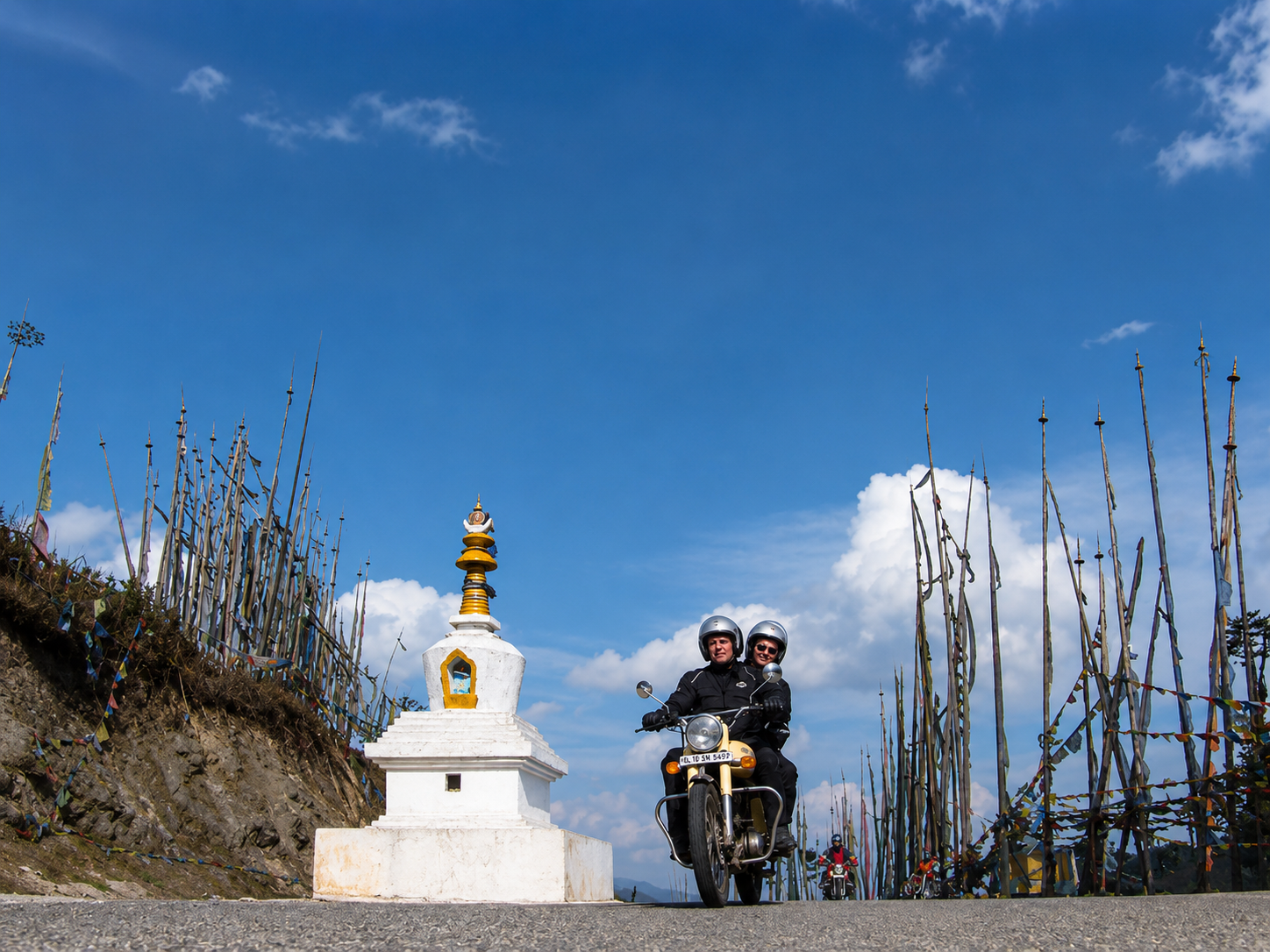
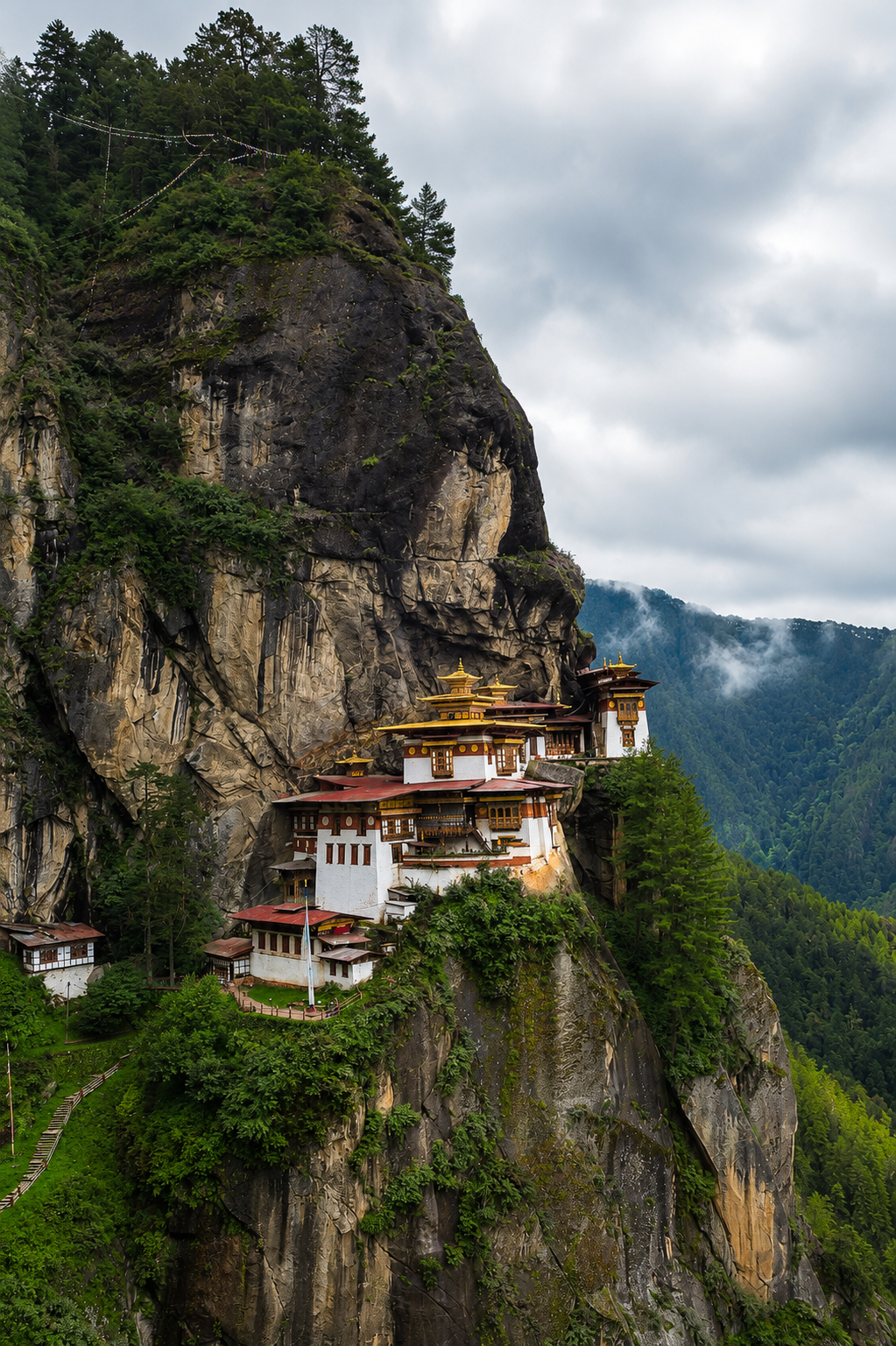
This 11-day motorcycle journey through Bhutan takes you through one of the most extraordinary and least-visited kingdoms in the Himalayas. The journey begins in Phuntsholing on the Indian border, where the road immediately climbs into a world of sweeping curves and dramatic changes in altitude. From there, the route winds through spectacular mountain terrain to the iconic Tiger’s Nest Monastery, Paro Taktsang, perched high above the valley near Paro on a rocky cliff.
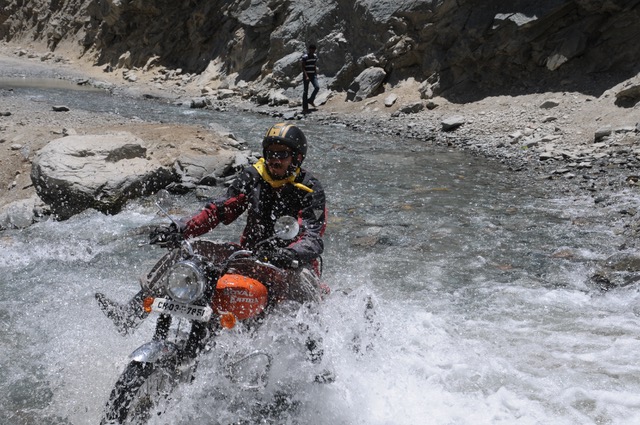
Between the capital Thimphu and the historic valleys of Punakha and Jakar, the route unfolds through tight hairpin bends, high mountain passes, expansive alpine landscapes, and monasteries clinging to steep cliffsides. Every stage feels like something out of a film — long, open roads, crisp Himalayan air, and the steady sound of the engine echoing through deep valleys. Riding a motorcycle here is motorcycling in its purest form: intense, challenging, and deeply rewarding.
Thimphu is known as the only capital city in the world without traffic lights — a fitting detail in a country that measures progress not solely through economic growth, but through the concept of Gross National Happiness, which is even enshrined in its constitution.
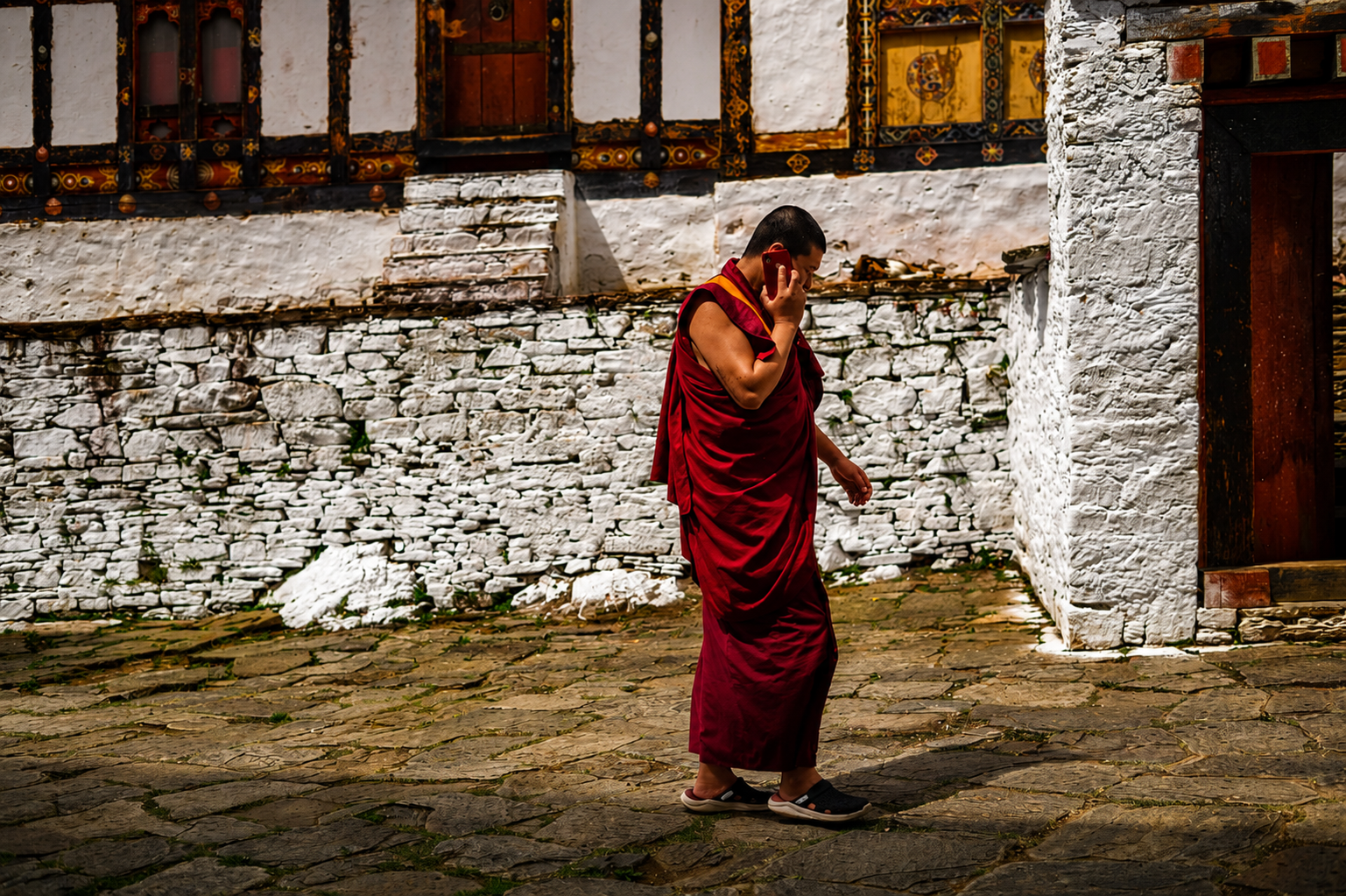
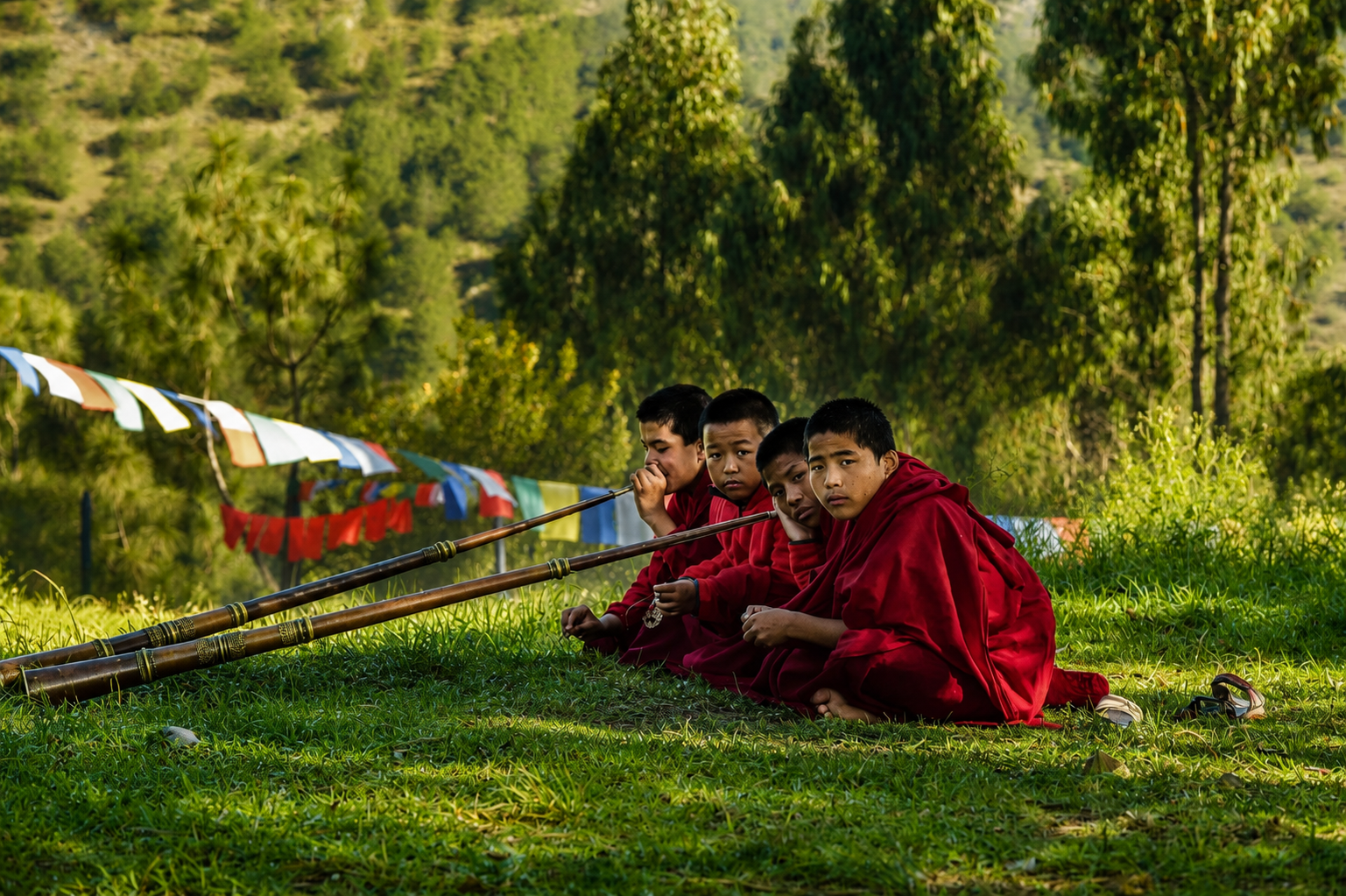
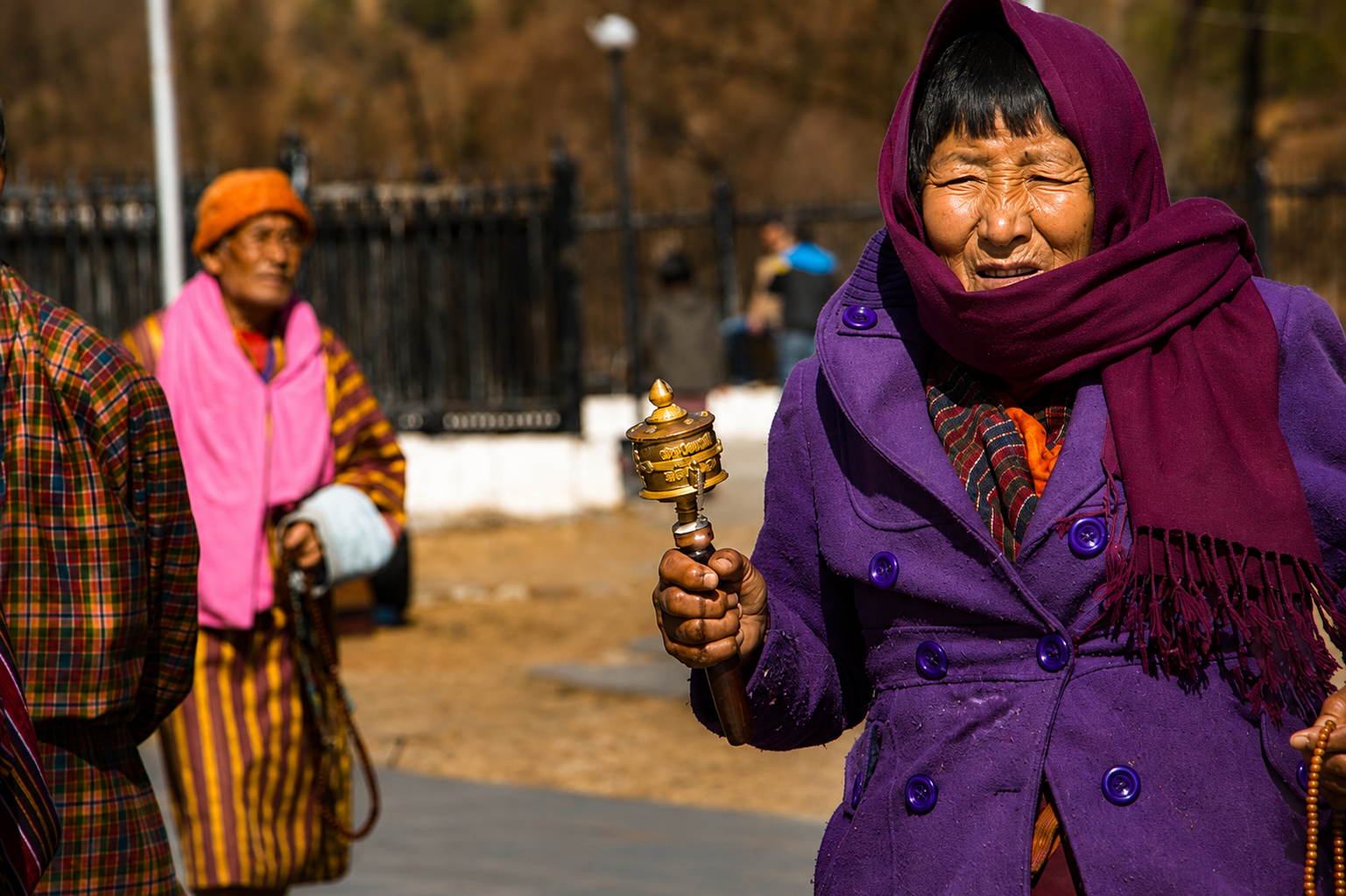
Often referred to as the “Land of the Thunder Dragon,” Bhutan offers an experience that feels both untouched and refined. Centuries-old traditions, deeply rooted Tibetan Buddhism, and carefully protected natural landscapes create a setting unlike anywhere else in the world. This guided motorcycle journey through Bhutan offers a rare way to experience this world, combining technically demanding high-altitude riding with memorable cultural encounters.
The result is far more than a tour. It is an unforgettable ride through the Himalayas — epic roads, powerful landscapes, and moments of stillness that stay with you long after the engine has fallen silent.
Rider: 5,450 €
Co-rider: 4,950 €
Single room supplement: 480 €
The price includes Bhutan's Sustainable Development Tax of $200/Person/Day
11 Days / 10 Nights (all in Bhutan) / 9 Riding Days (all in Bhutan)
Rider: € 5,450
Pillion-Rider: € 4,950
Single room supplement: €390
The price also includes Bhutan's "Sustainable Development Tax" of $100/person/day.11 days / 10 nights (all in Bhutan) / 9 driving days (all in Bhutan)
Yes. You must carry an international driving permit along with your national driving license. It’s not always checked, but you’ll need it if you’re stopped.
We expect to spend around five hours driving each day. The distance covered depends on the route chosen; on average, it will be between 100 and 200 km daily. Occasionally, we may drive less than 100 km, and sometimes more—always depending on what road conditions allow. The state of the roads is often more decisive than the actual distance traveled.
We generally start early enough to allow for an afternoon buffer. This ensures that, even in the event of unexpected delays, we can arrive before nightfall, as we generally avoid driving after dark.
Due to significant altitude changes and variable weather in the mountains, it’s important to be prepared for both warm and cold conditions. In the valleys, a pair of lightweight long pants and a light jacket are often enough in the evenings, while high mountain passes can bring brief periods of winter-like conditions. Quality gear is often hard to find locally, so it’s best to bring everything you need from the start.
Motorcycle gear:
Casual and everyday clothing:
Additional notes:
Packing list: All participants receive a detailed packing list with practical recommendations well before the tour begins.
Smoking in Bhutan is generally strictly regulated and not permitted in many public as well as culturally and religiously significant areas. The country traditionally follows a very restrictive tobacco policy, making smoking relatively uncommon in everyday life and mostly limited to clearly designated areas. Discretion is advised.
E-cigarettes and vape products are strictly prohibited in Bhutan. Import, possession, and use can lead to issues upon entry or within the country.
It is recommended to carry a mix of cash (USD or EUR), a credit card, and an ATM card (Visa and Mastercard are more widely accepted, while American Express and Diners are less common). Make sure your ATM card is activated for international use outside European countries—this is often referred to as “Geo Control” at your bank.
Card payments are not accepted everywhere, so having cash on hand is important. Only carry undamaged notes, as even slightly torn or marked bills are often refused. Smaller denominations are recommended for tips.
In larger towns, ATMs are generally available, but they are less common than in Europe. Cash can be changed at airports, hotels, and official exchange offices.
There have been isolated cases of ATM tampering and card data misuse. To minimize risk, use only ATMs located in secure, busy areas—such as inside banks or large hotels, or those recommended by our tour guide.
How much cash will I need?
Most of the costs incurred during the tour are included in the tour price. For personal expenses such as drinks, souvenirs, tips, etc., it is advisable to carry some cash. As a general guideline, bringing around €200 to €300, depending on the destination country, has proven sufficient. In addition, a deposit of €500 or 500 USD is required in cash on site as a security deposit for the motorcycle.
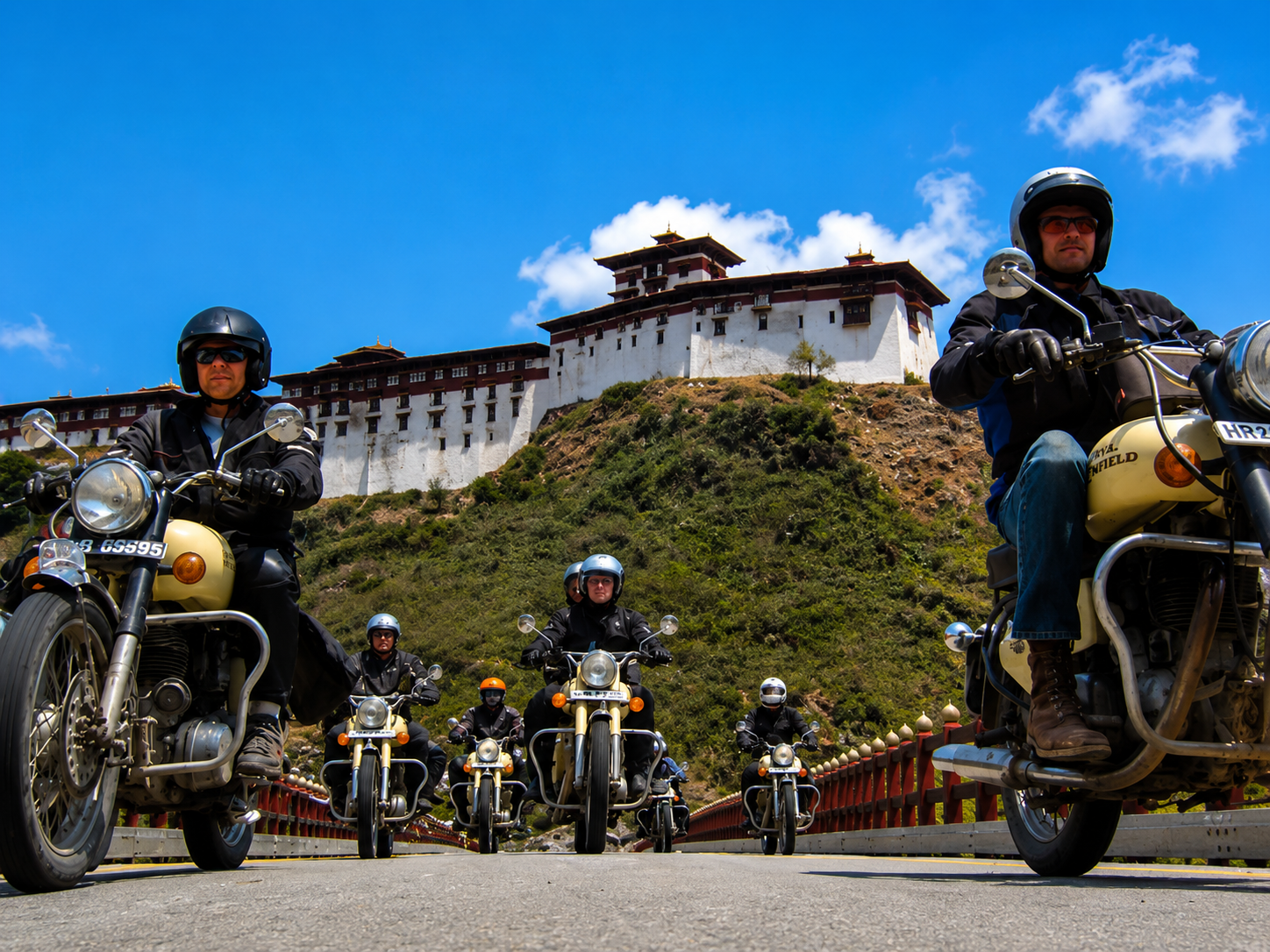
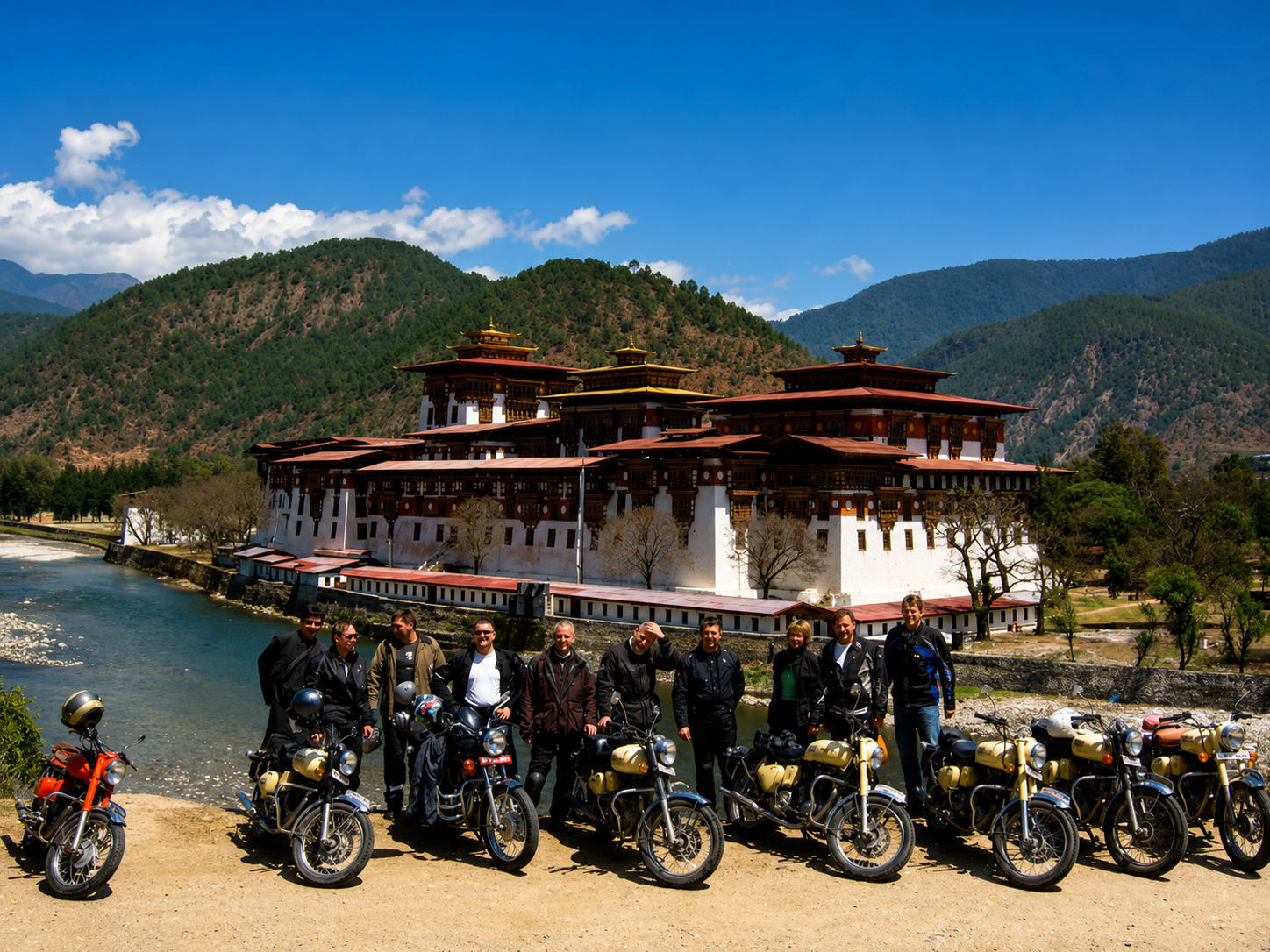
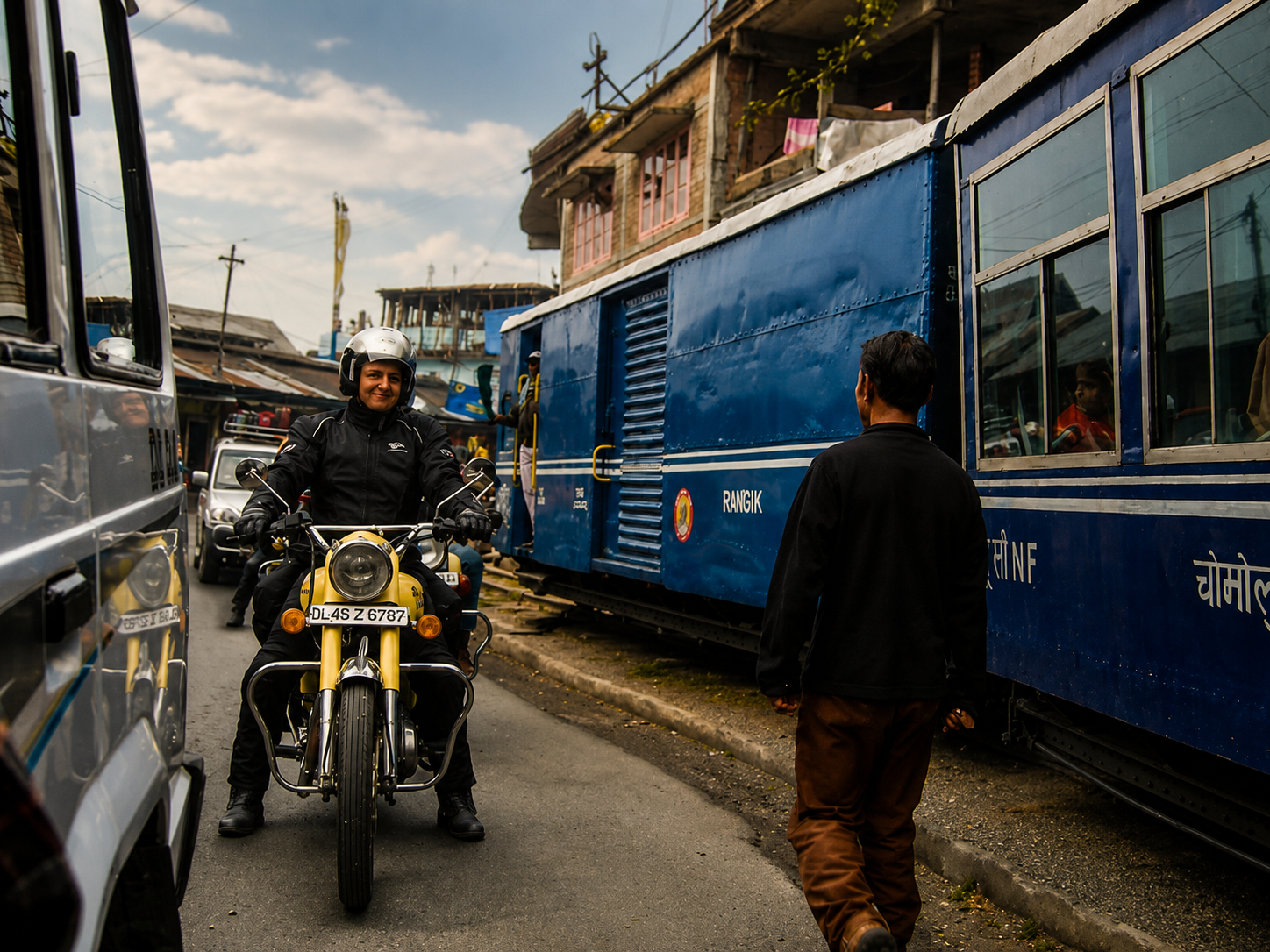
The Royal Enfield Himalayan 450.
On request, the Himalayan 411 or the legendary Royal Enfield Bullet 500 (left shift, electric starter, front disc brake) are also available.
Visa and entry regulations may change at any time. The following information is provided for general guidance only. Please always check the official Bhutanese government websites for the latest information.
Bhutan follows a controlled tourism policy. Independent travel without a pre-arranged tour is generally not permitted.
Citizens of most countries (including EU member states, the USA, Australia, etc.) require a visa to enter Bhutan.
The visa must be arranged prior to travel through a licensed Bhutanese tour operator or an international partner agency. Individual visa applications without a booked tour are generally not possible.
Asia Bike Tours handles the complete visa application process as part of the tour.
After full payment and approval, an official Visa Clearance Letter is issued. The actual visa is stamped into the passport upon arrival at Paro International Airport or at an approved land border crossing.
International visitors (with the exception of Indian nationals) are required to pay a daily Sustainable Development Fee (SDF). This fee is alsoincluded in the tour price.
The passport must be valid for at least six months at the time of entry and contain sufficient blank pages. A return or onward ticket is required.
Yes, it is generally easy for international visitors to obtain a local prepaid SIM card in Bhutan.
SIM cards are available at Paro International Airport as well as in larger towns such as Thimphu and Paro. You will usually need your passport and your visa or visa clearance letter.
The main providers are B-Mobile (Bhutan Telecom) and TashiCell. Mobile data works reliably in cities and along major roads, while coverage in remote mountain areas can be limited.
Photography in Bhutan is generally allowed, but there are important cultural and legal considerations.
Temples, monasteries, and religious sites often have restrictions—ask for permission before photographing monks, religious rituals, or sacred objects.
People’s privacy should always be respected; always ask before taking close-up photos of locals.
In government buildings, military sites, and some border areas, photography is strictly prohibited. Drone use requires a special permit.
Flying drones in Bhutan is strictly regulated. Tourists are not allowed to bring or use drones without a special permit from the Department of Civil Aviation.
Even with a permit, usage is limited to approved areas, and flying over religious sites, government buildings, or crowded places is prohibited.
Violating drone regulations can lead to confiscation, fines, or legal action.
For entry into Bhutan, no vaccinations are required.
However, travelers arriving from a yellow fever risk area must present a valid yellow fever vaccination certificate.
It is generally recommended to consult a travel medicine specialist before the trip for advice on vaccinations and individual health protection.
Typical souvenirs from Bhutan include traditional textiles like handwoven clothing, scarves, and tablecloths, Thangka paintings (religious scrolls), Buddha statues and masks, handcrafted jewelry made of silver or semi-precious stones, as well as local herbs, spices, and tea.
Small wood or paper crafts, postcards, stationery, and Bhutanese coins are also popular keepsakes.
In Bhutan, it is important to show respect for religion and tradition. When visiting temples, monasteries, or religious sites, shoulders and knees should be covered, hats removed, and shoes taken off.
Photography is often only allowed with permission. Loud conversations, arguments, or inappropriate behavior in religious or public spaces should be avoided. A common greeting is a slight nod or placing hands together in front of the chest (Namaste).
It is also important to respect local culture, clothing, and customs and to dispose of waste properly.